

Diwali 2026 falls on Sunday, 8 November, and the Lakshmi Puja that evening makes your pooja room the heart of the home. If your mandir corner looks tired, a fresh pooja room design can make it feel sacred and festive again, without a long or messy renovation.
Today, many families are choosing PVC marble sheets, jaali doors and soft backlighting instead of heavy stone and wood. These materials look elegant, cost less, and are easy to clean after diyas and puja.
In this guide, you will find 8 beautiful pooja room design ideas for every home size, from a full pooja room to a small corner in a flat. You will also get simple Vastu tips, Diwali decoration ideas and an important safety rule for lighting diyas near PVC.
Why Your Pooja Room Design Matters This Diwali
Diwali is a five-day festival in 2026: Dhanteras on 6 November, Choti Diwali on 7 November, Lakshmi Puja on 8 November, Govardhan Puja on 10 November and Bhai Dooj on 11 November (Drik Panchang).
Lakshmi Puja is done on the night of Kartik Amavasya, in the evening window called Pradosh Kaal (Shubh Panchang). Exact muhurat timings differ by city, so check your local panchang.
Families invite Goddess Lakshmi into a clean, bright and welcoming home on this night. That is why so many people upgrade their pooja room design in the weeks before Diwali.
Pooja room design trends for 2026
- PVC marble sheets. Matte PVC marble sheets are made from plastic resin and stone powder, with a soft, non-reflective marble pattern (HomeBazaar).
- Jaali and arches. Geometric jaalis and scalloped arches inspired by haveli doors are part of this year’s festive design mood, along with classic lotus and peacock motifs (Radha Krishna Temple blog).
- Soft, layered lighting. Backlit panels and warm LED strips are replacing harsh tube lights in modern mandirs.
If you are also planning panels for the rest of the house, see our guide to 12 PVC wall panel design ideas for a Diwali home makeover.
8 Beautiful Pooja Room Design Ideas for Diwali 2026
These ideas work for full pooja rooms, living room mandirs and small apartment corners. Pick one main idea, then add Diwali decor on top.
1. White PVC Marble Sheet Mandir Backdrop
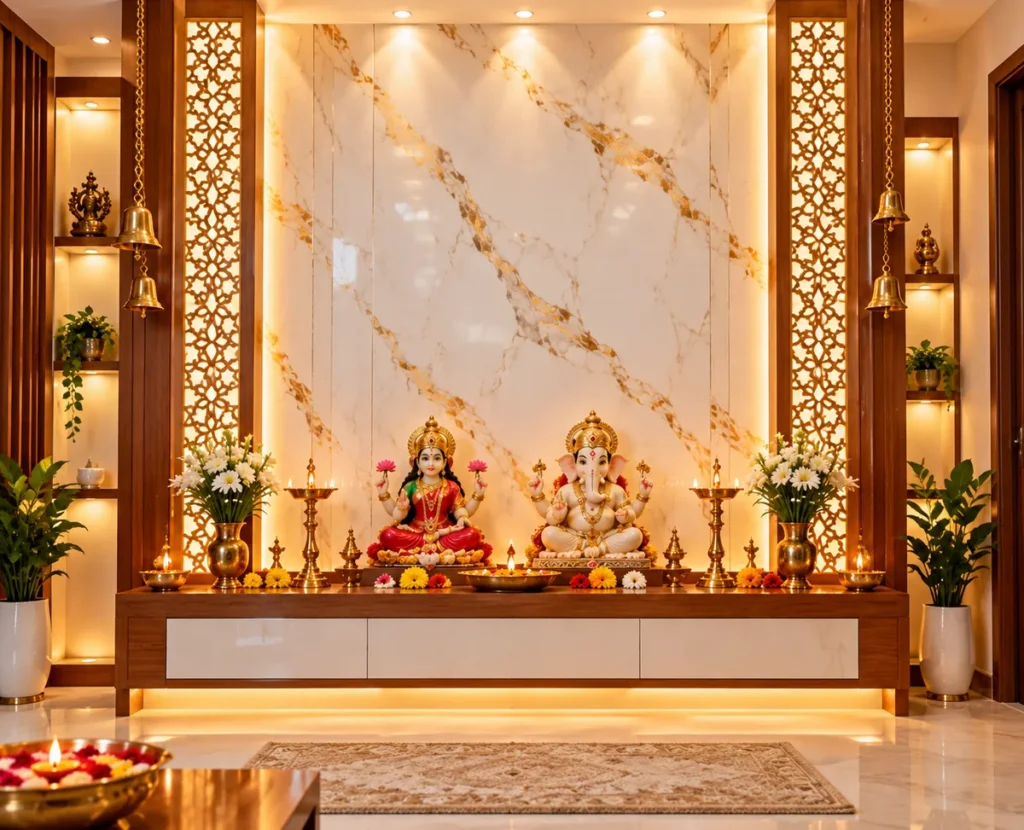
A white or ivory marble look feels pure and calm, which is why it suits a mandir so well. PVC marble sheets give that look at a fraction of the cost of natural marble, usually ₹100–₹250 per sq ft depending on quality and finish (HomeLane).
This pooja room design is also practical. Oil marks, kumkum and soot from diyas wipe off with a damp cloth.
2. Jaali Door Pooja Room Design
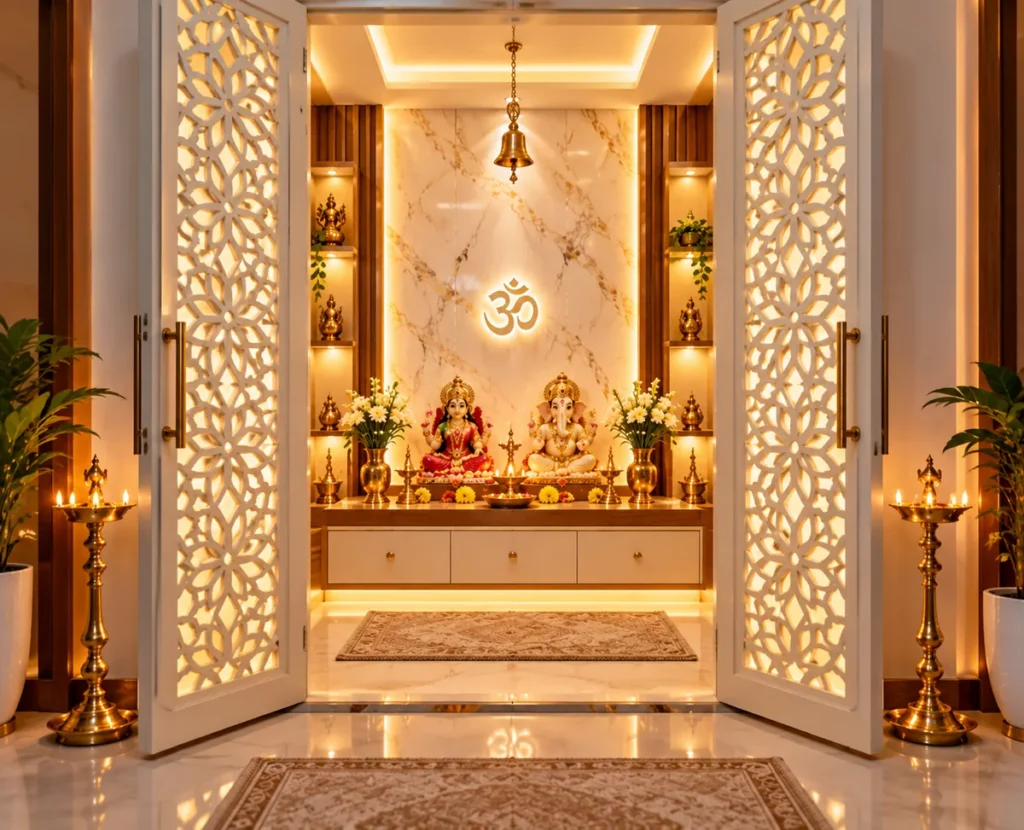
Jaali doors give the mandir privacy while still letting light and air flow. When diyas are lit inside, the pattern throws beautiful shadows across the room.
Choose geometric, lotus or mandala patterns. Jaali panels in PVC or MDF are lighter and cheaper than carved wood, and they can be painted white or gold.
3. Backlit Panel with Lotus or Om Motif
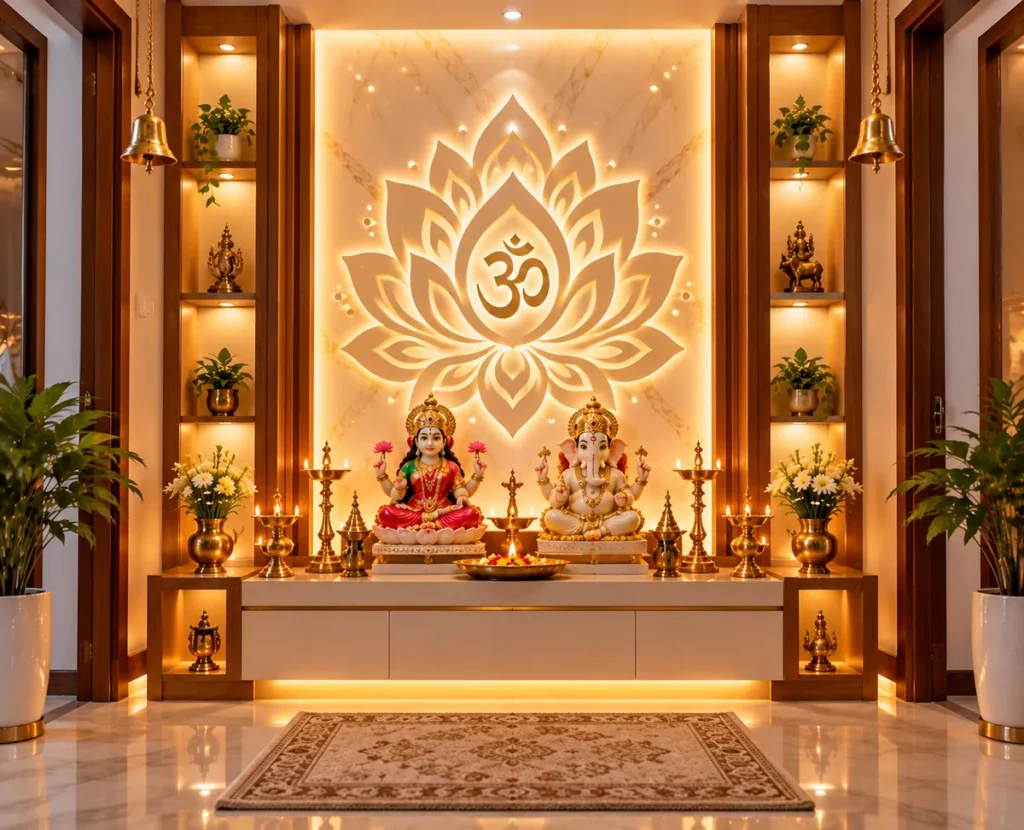
A backlit panel behind the idols creates a gentle, divine glow. It looks especially beautiful during Diwali evenings, and you can switch it on every day for aarti.
The lotus is Lakshmi’s main symbol (Shubh Panchang), so a lotus motif is a meaningful choice for this pooja room design.
4. Small Pooja Room Design for Flats: Wall-Mounted Mandir
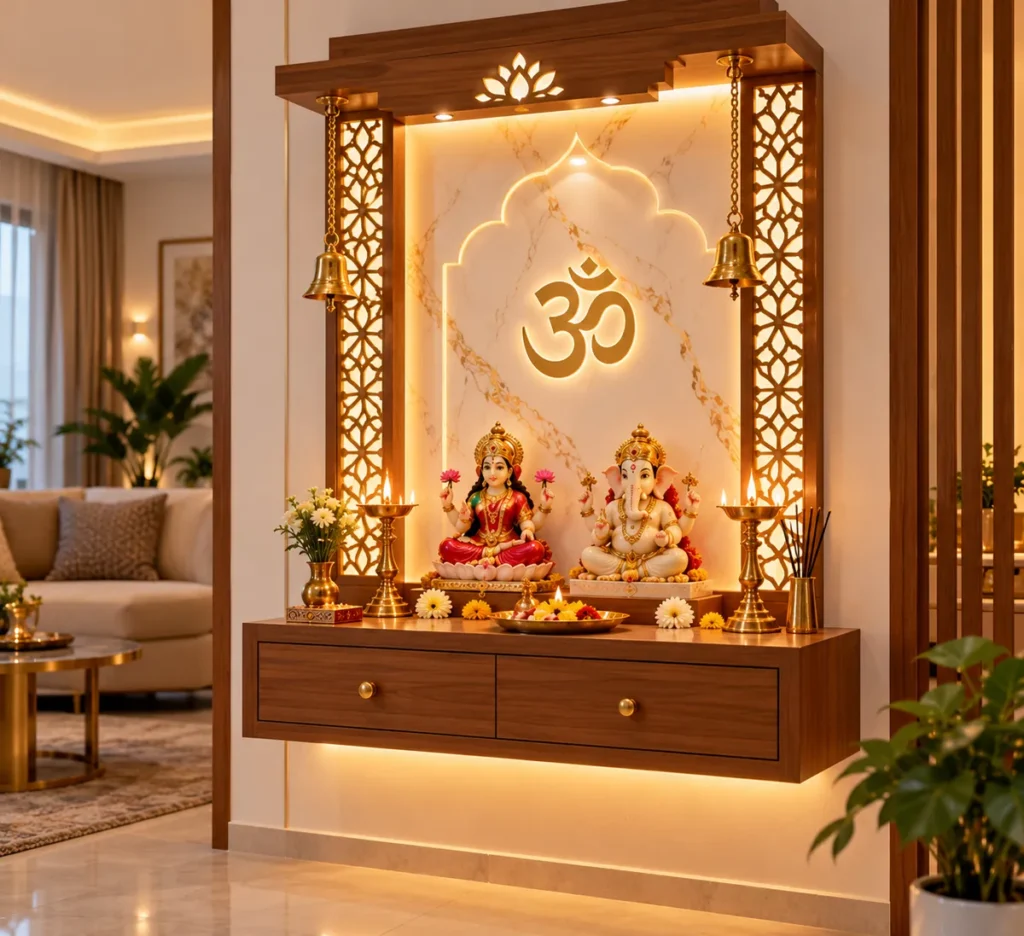
No space for a separate room? A wall-mounted mandir needs only a small section of wall. Place a marble-look PVC panel behind it to mark the space as sacred.
Add a small drawer below for agarbatti, matchboxes and puja books. This keeps the area clutter-free, which matters for both looks and Vastu.
5. Corner Mandir in the Living Room
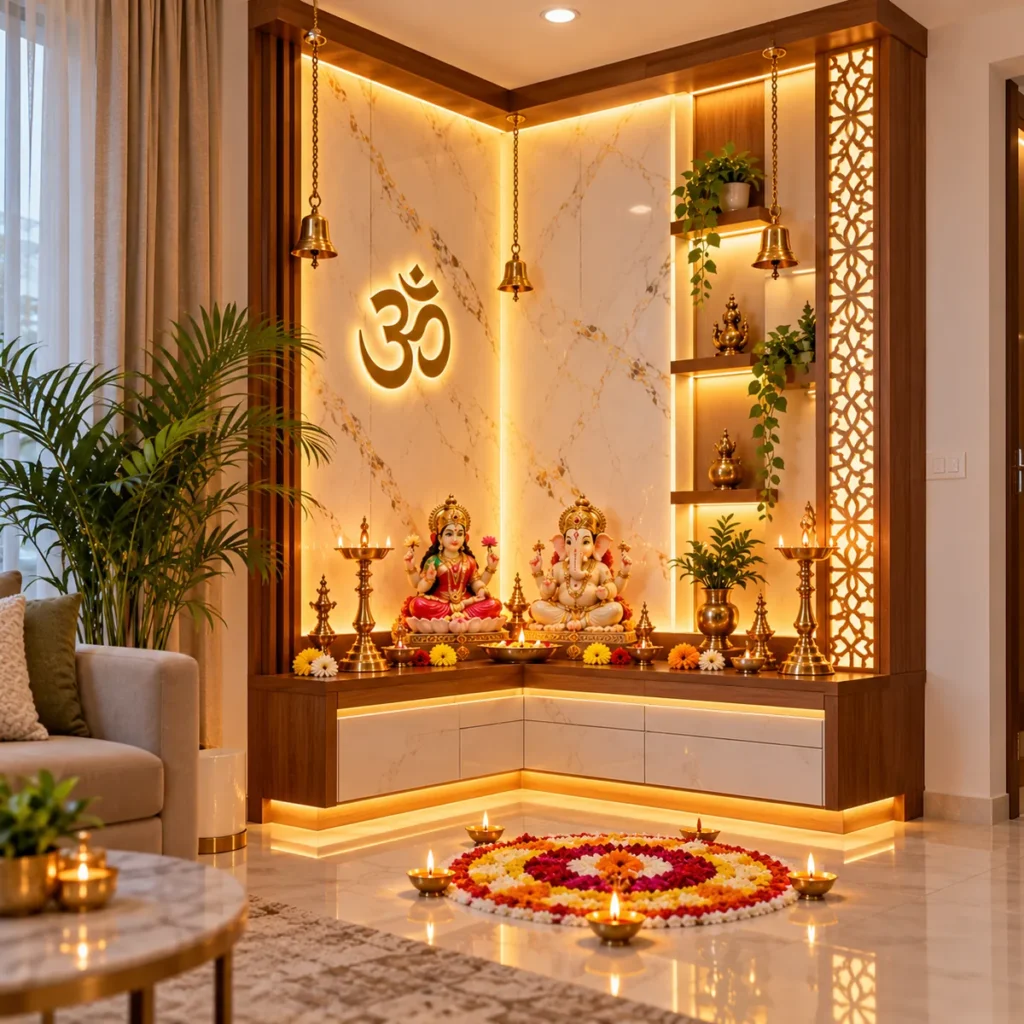
An unused corner of the living room can become a peaceful mandir. Cover both corner walls with marble-look panels and add a low wooden platform for the idols.
If possible, choose the northeast corner. Vastu experts consider it the best direction for a pooja space, as explained in the Vastu section below.
6. Haveli-Style Arch Pooja Room Design
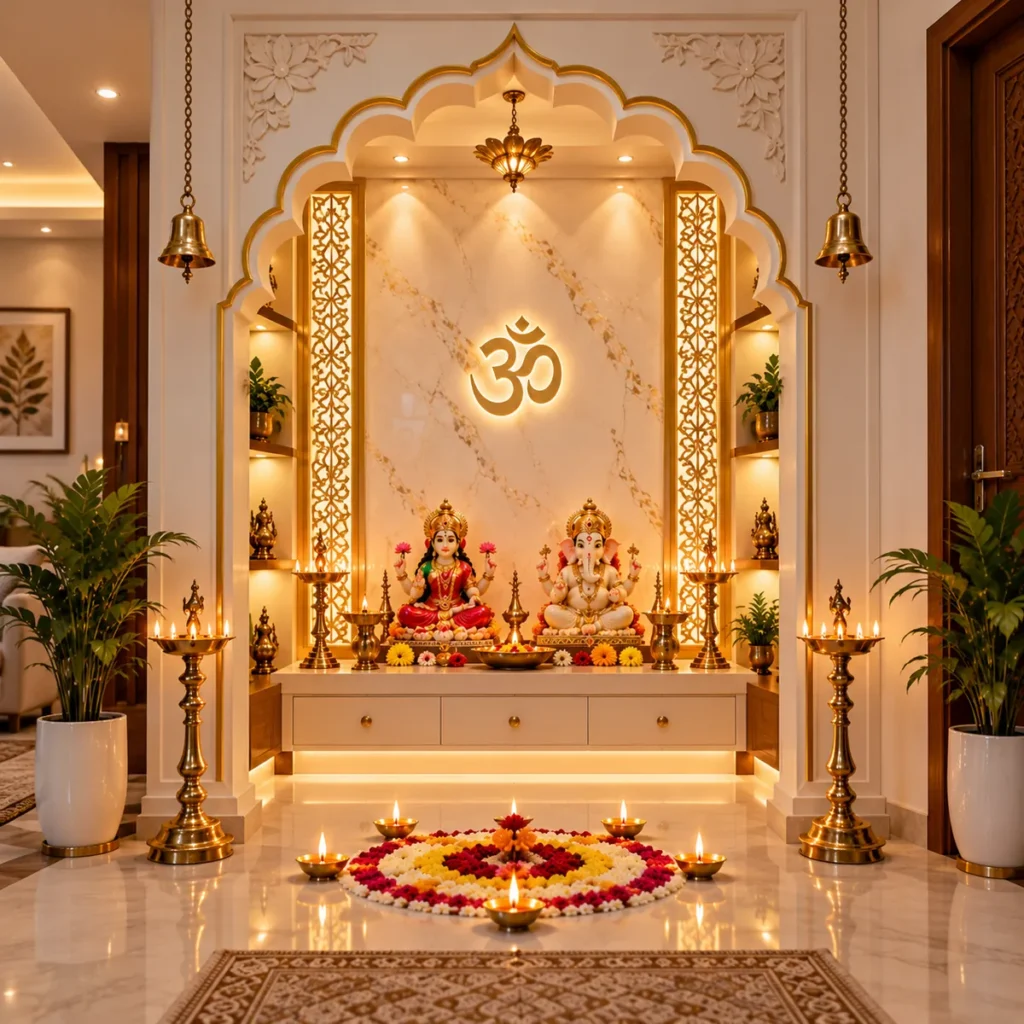
Scalloped arches remind us of old havelis and temple doorways. An arch frame around the mandir instantly makes the space feel traditional and grand.
Use a white arch with a thin gold border and a marble-look wall inside. It photographs beautifully for Diwali family pictures.
7. Gold and White Pooja Room Design
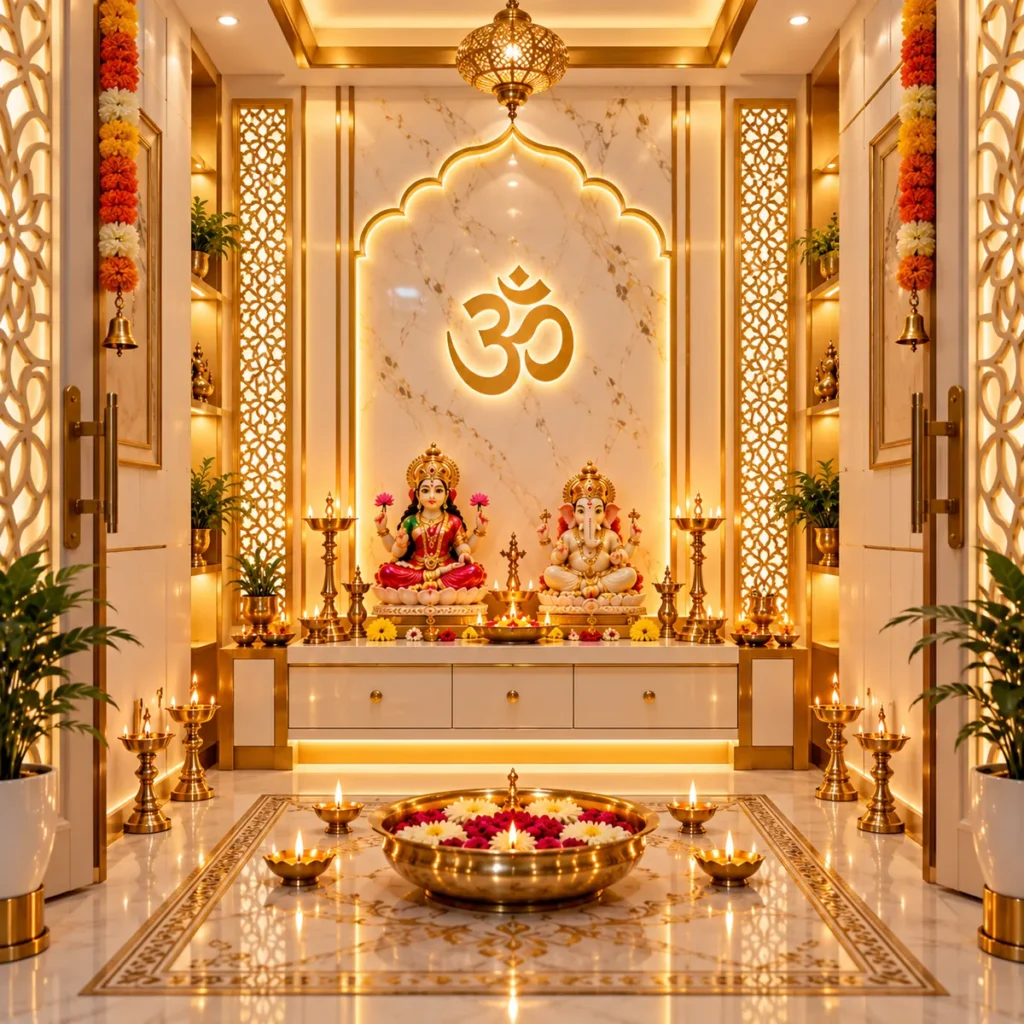
Gold and white is a classic Diwali combination. Pair white marble sheets with thin gold strips, brass bells and a brass urli filled with floating flowers.
Keep the gold to trims and accessories. A little gold looks rich; too much can feel heavy in a small room.
8. Wooden Mandir with Marble Base
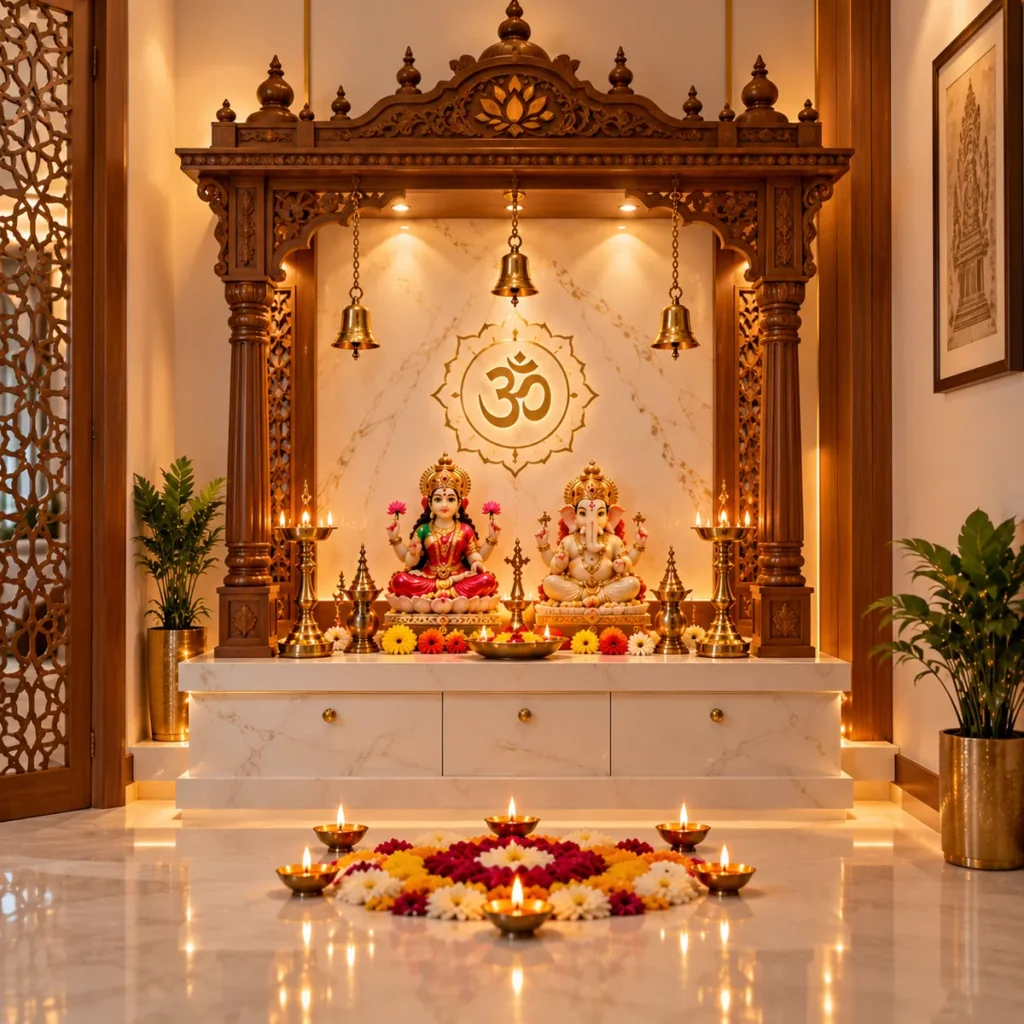
If you love a traditional look, combine a carved wooden mandir with a marble-look base and back wall. The warm wood and cool marble balance each other well.
This mandir design for home suits both modern flats and older homes. It also pairs well with personal touches such as a custom name plate or family photo frames, as shown in our guide to personalized home decor items.
Vastu Tips for Your Pooja Room Design
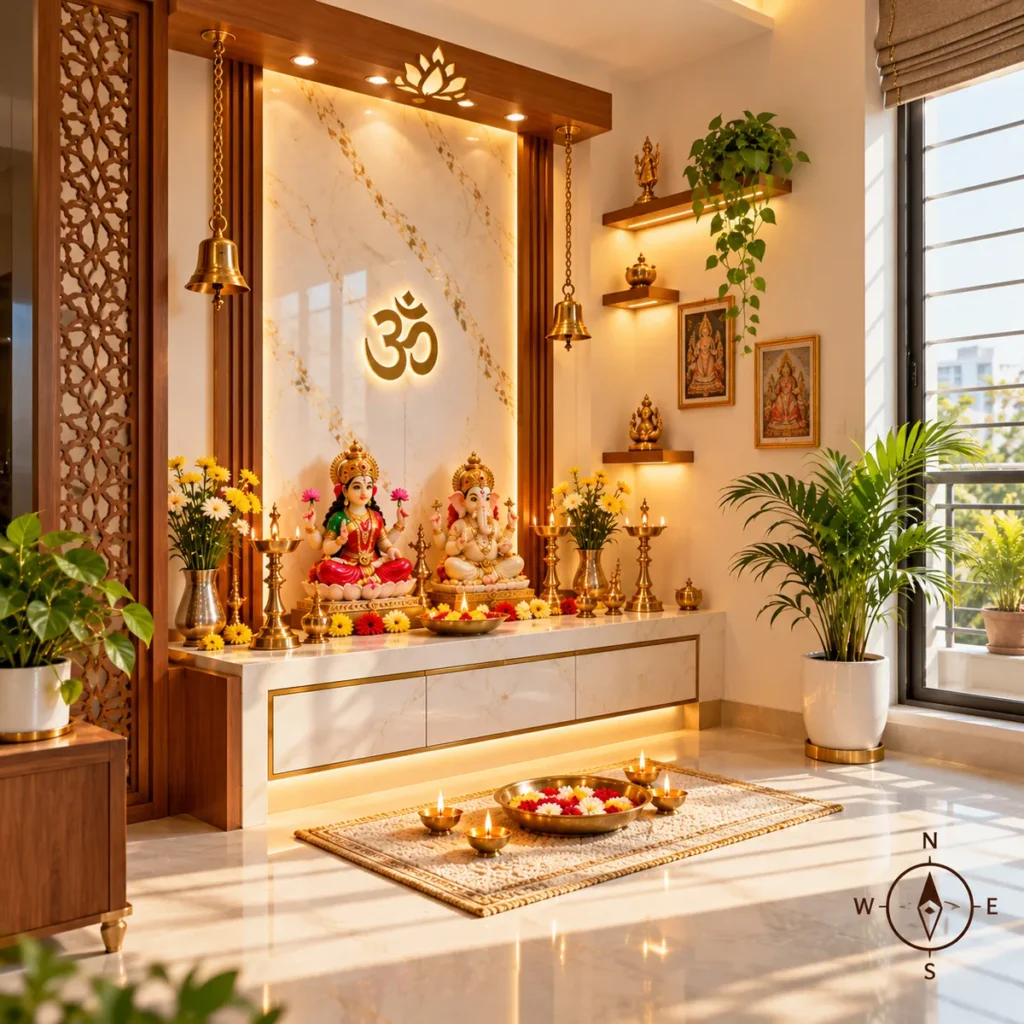
Many Indian families like to follow Vastu Shastra when planning a pooja room design. These are the most commonly followed guidelines.
- Best direction: The northeast, known as Ishan Kona, is considered the most auspicious direction for a pooja room (Bajaj Finserv). If northeast is not possible, east is the next best choice (Beautiful Homes).
- Idol placement: Idols are ideally placed on the northeast wall of the pooja room (Beautiful Homes).
- Direction to avoid: Vastu guides advise against placing the pooja room on the south side (HomeLane).
- Location to avoid: Keep the mandir away from bedrooms and bathrooms (Bajaj Finserv).
- Diya placement: Lamps are traditionally placed in the southeast of the pooja room (The Decor Journal India).
- Keep it clutter-free: A clean, open mandir is a basic Vastu rule for every direction (Beautiful Homes).
Living in a flat? You can apply these rules by using the northeast corner of your living room or a wall-mounted mandir (Bajaj Finserv).
For more ideas to bring positive energy into the rest of your home, read our simple Vastu tips for home.
Pooja Room Decoration for Diwali
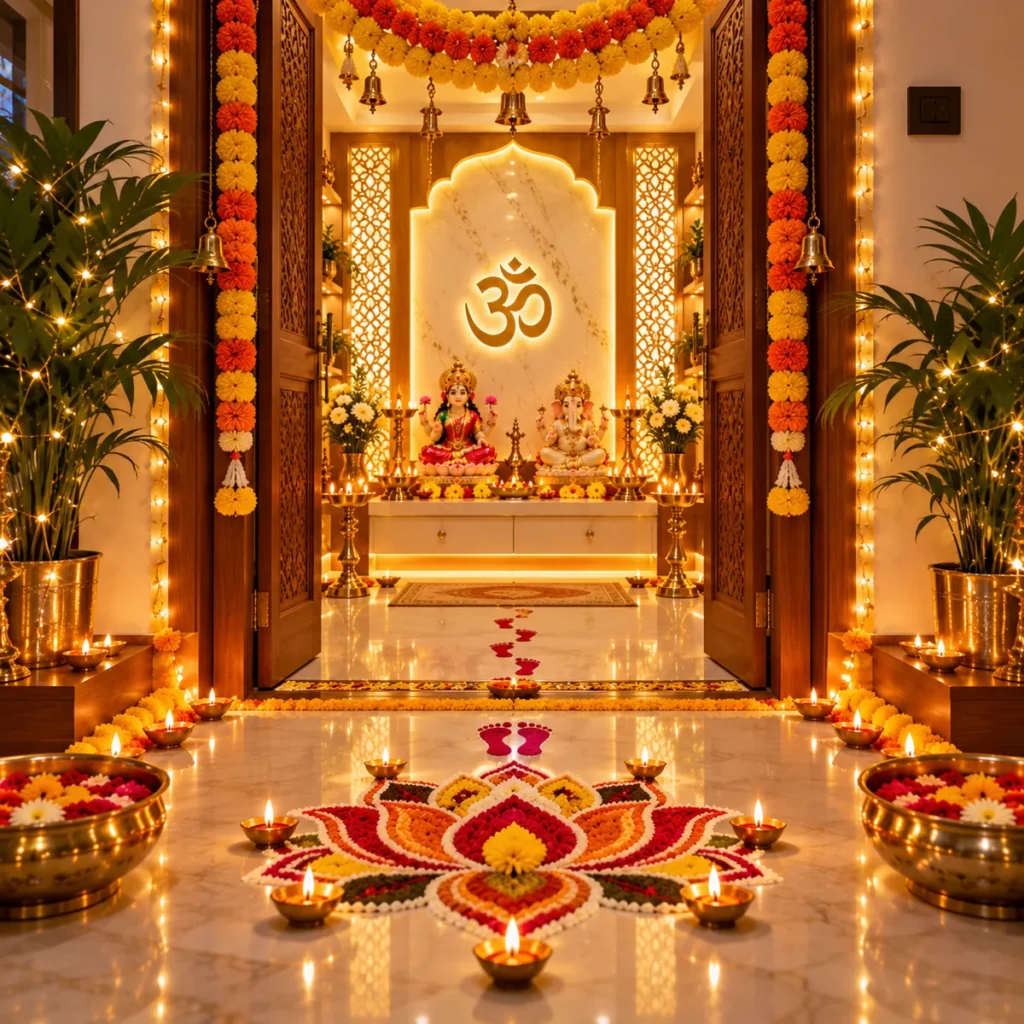
Once your pooja room design is ready, these simple touches will make it festive for Lakshmi Puja.
- Lotus rangoli at the entrance. Traditional Diwali rangoli uses the lotus, small footprints leading inward to welcome Lakshmi, and the swastika (Shubh Panchang).
- Marigold toran on the door. Fresh marigolds wilt quickly, so buy them only a few days before Diwali.
- Brass urli with floating flowers. Place it near the mandir entrance with rose petals and a few floating diyas.
- Rows of clay diyas. Line them along the doorway and the platform edge, keeping a safe gap from walls and panels.
- Fresh kalash and bells. Polish brass items a day before puja so they shine in diya light.
Safety tip: diyas and PVC panels
PVC is a plastic, so it can scorch or melt from a close flame. Burning PVC also releases harmful smoke.
Keep diyas, candles and agarbatti at least a hand’s width away from PVC panels and jaali screens. Place real diyas on a brass plate or the floor rangoli, and use LED diyas inside closed or narrow mandir units.
Smoke from diyas and incense can also affect the air at home, especially for children and elders. Our guide on indoor air quality and family health has simple fixes.
FAQs on Pooja Room Design
Which direction is best for a pooja room?
As per Vastu, the northeast (Ishan Kona) is the most auspicious direction for a pooja room. East is the next best option if northeast is not available.
Which panel is best for a pooja room?
A white or ivory PVC marble sheet is a popular choice for a modern pooja room design. It looks like marble, costs less, and is easy to wipe clean.
What is the PVC marble sheet price in India?
PVC marble sheets usually cost about ₹100–₹250 per sq ft, depending on quality and finish. Labour is extra and varies by city.
What is the best small pooja room design for a flat?
A wall-mounted mandir with a marble-look panel behind it is the best small pooja room design for most flats. A corner mandir in the living room is another good option.
How should I decorate my home for Lakshmi Puja?
Clean the whole house first, then add a lotus rangoli at the entrance, a marigold toran, fresh flowers and rows of diyas. Keep the pooja room bright and clutter-free.
Is it safe to light diyas near PVC panels?
Keep real diyas at least a hand’s width away from PVC panels and never place them touching the wall. Use LED diyas inside narrow or closed mandir units.
Conclusion: Welcome Lakshmi into a Beautiful Pooja Room
The right pooja room design does not need a big budget or weeks of work. A PVC marble backdrop, a jaali door or a soft backlit panel can make your mandir feel new in just a few days.
Plan your changes now, finish them before Dhanteras on 6 November, and keep diyas at a safe distance from PVC. Then light your diyas on 8 November and enjoy a peaceful, glowing Lakshmi Puja with your family.
Which pooja room design idea did you like most? Share it in the comments, and tell us how you are decorating your mandir this Diwali.
Also read: