
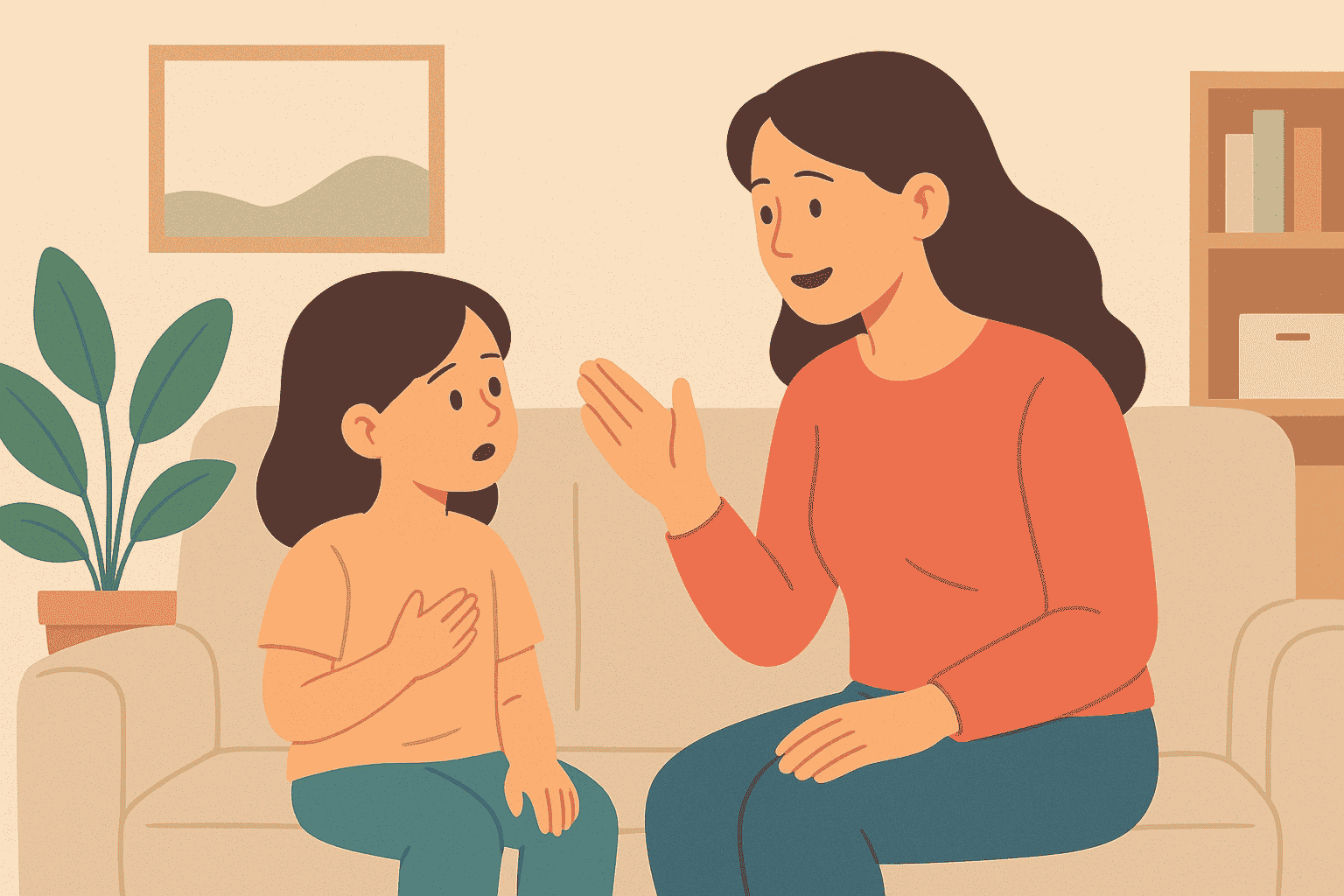
Emotional intelligence (EI) has become one of the most valued traits in today’s world, often considered as important as academic excellence. Unlike IQ, which focuses on cognitive ability, EI revolves around recognizing, understanding, and managing emotions—both in oneself and in others.
For children, developing emotional intelligence can foster resilience, empathy, strong communication, and healthier relationships throughout life. As parents, nurturing emotional intelligence from an early age can give children a significant advantage in navigating the complexities of the modern world.
Here’s how you can raise emotionally intelligent children.
1. Teach Them to Recognize and Label Emotions
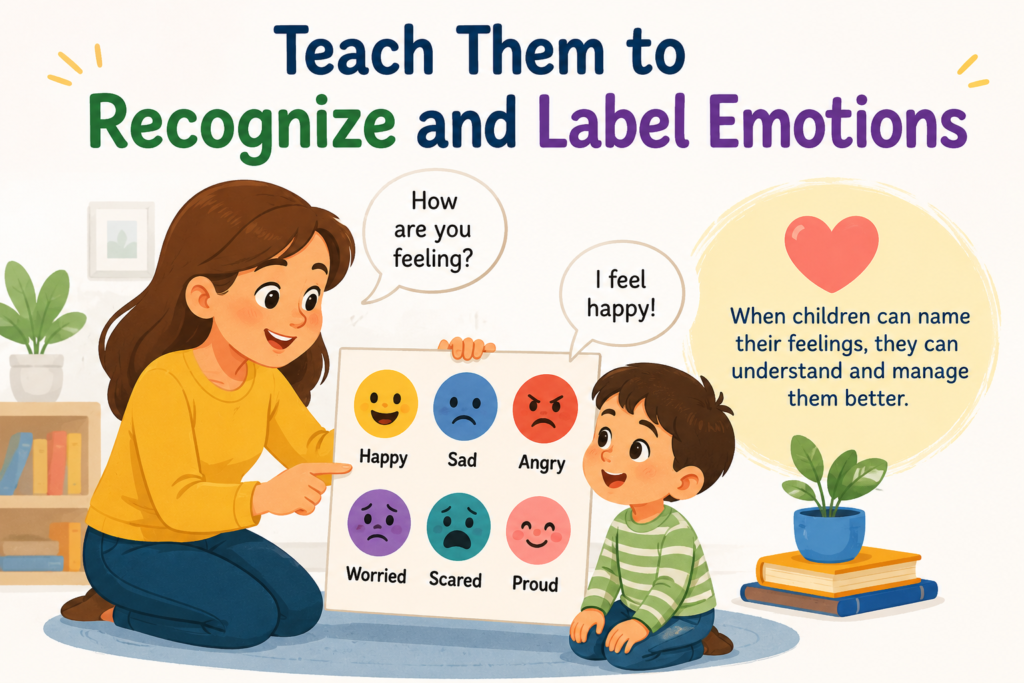
The foundation of emotional intelligence is self-awareness, which begins with recognizing emotions. Young children often feel frustrated, scared, or overwhelmed but lack the vocabulary to describe their emotions. Parents can help by naming emotions for them.
For example, saying, “I see you’re upset because your toy broke,” not only validates their feelings but also helps them connect emotions with words.
As children grow, encouraging them to use precise language—such as “disappointed,” “nervous,” or “proud”—instead of broad terms like “happy” or “sad” equips them with better tools to articulate their inner world.
2. Model Emotional Intelligence in Your Own Behavior
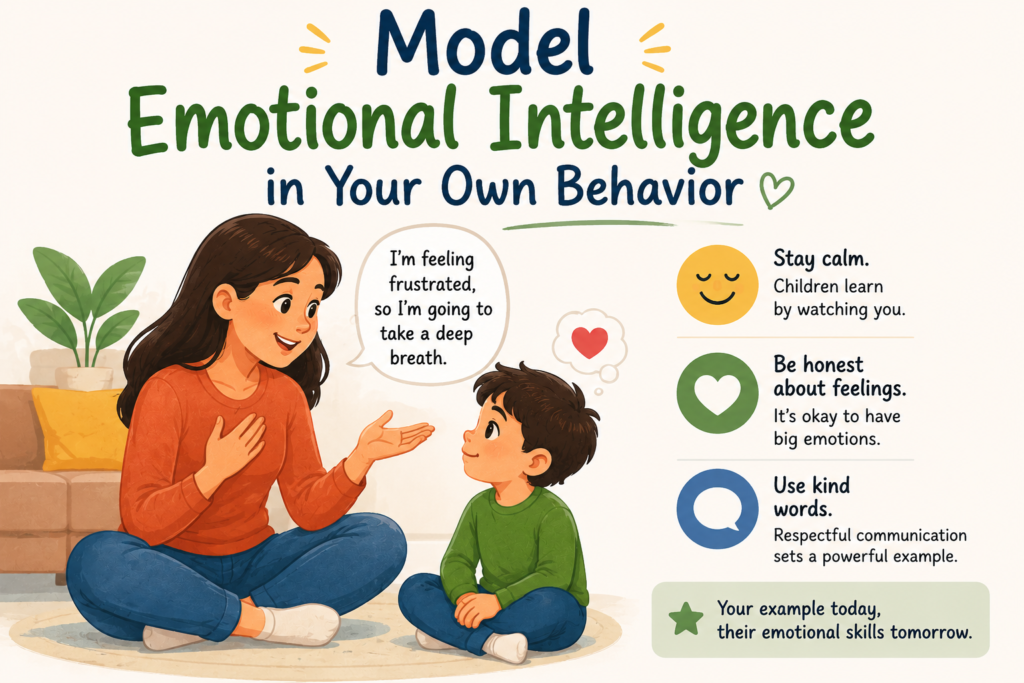
Children learn as much from what you do as from what you say. Parents who demonstrate emotional regulation, empathy, and respectful communication provide a live blueprint for their kids. If you lose your temper but later apologize and explain your feelings, children learn that mistakes happen and emotions can be managed constructively.
3. Validate, Don’t Dismiss Their Feelings
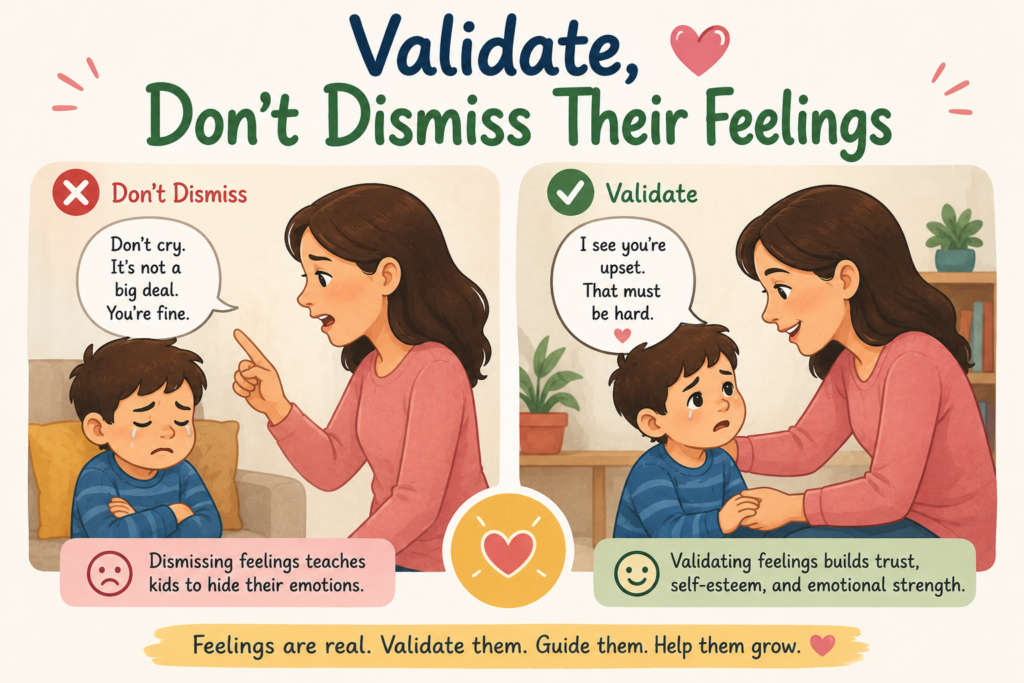
It’s common to brush off a child’s feelings with phrases like “Don’t cry,” or “It’s not a big deal.” While well-intentioned, this can teach kids to suppress emotions rather than express them appropriately. Validation is key: acknowledge their feelings even if you don’t agree with their reaction.
For example, if your child cries because a friend didn’t invite them to play, instead of saying “Don’t be silly,” you can respond, “I understand you’re feeling left out. That must hurt.” This builds trust and reassures them that their emotions matter.
4. Teach Problem-Solving Skills
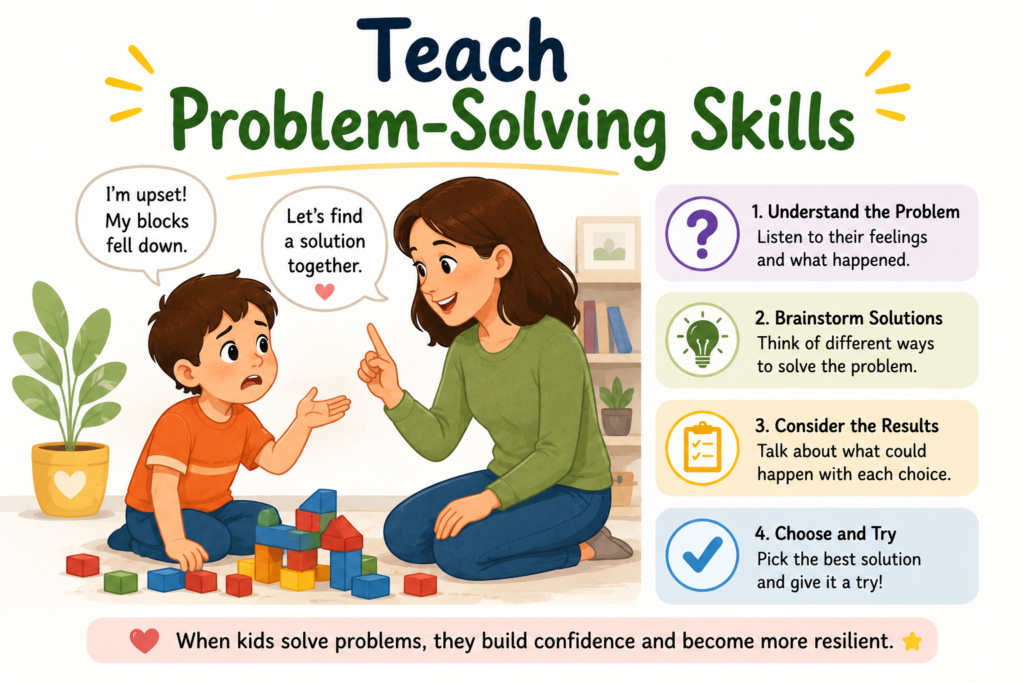
Once emotions are recognized and validated, children need guidance on how to cope with them effectively. Helping your child brainstorm solutions teaches resilience and emotional regulation.
For example, if a child feels angry because a sibling took their toy, guide them through possible responses: asking for it back politely, taking turns, or finding another toy. Encourage them to consider outcomes of each solution. Over time, this practice empowers children to regulate emotions without resorting to aggression or withdrawal.
5. Encourage Empathy and Perspective-Taking
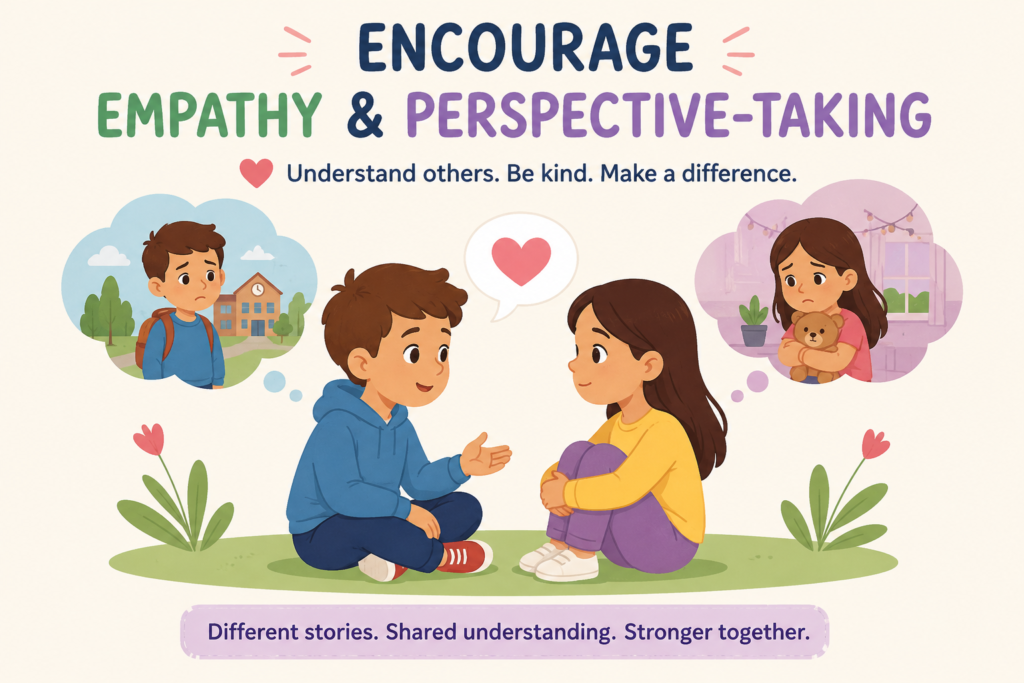
Empathy is at the heart of emotional intelligence. Helping children understand how others feel builds compassion and social awareness. You can foster empathy by asking reflective questions: “How do you think your friend felt when you shared your snack?” or “How would you feel if someone said that to you?”
Storytelling and reading are also powerful tools. Discussing characters’ emotions in books or movies helps children step into others’ shoes, widening their emotional lens.
6. Teach Healthy Expression of Emotions
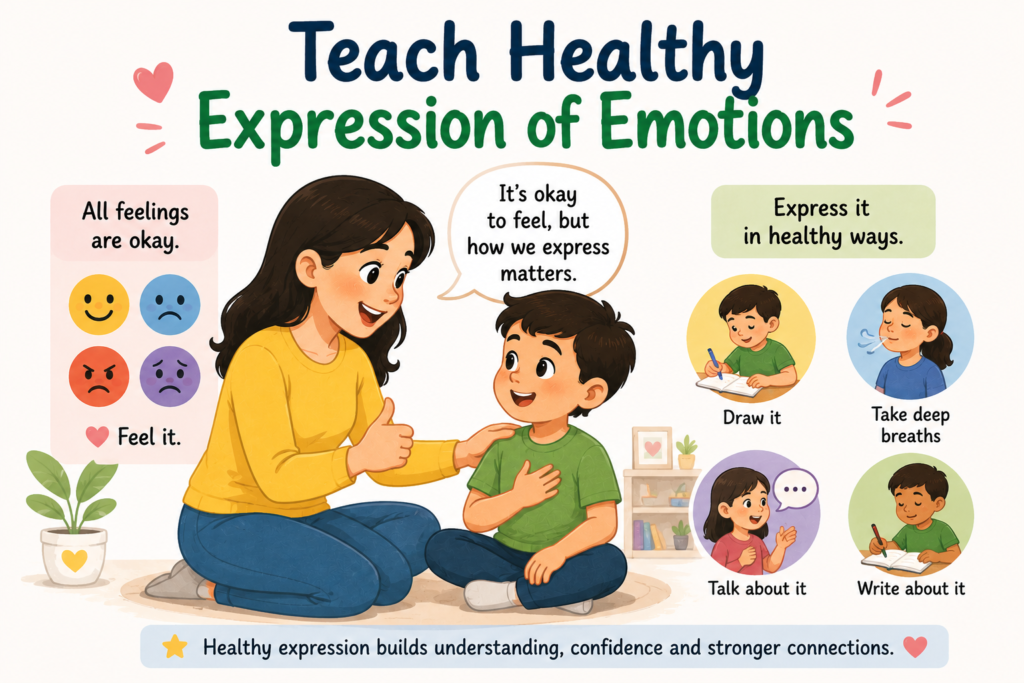
Children need safe outlets to express their feelings. Encourage them to share emotions verbally, through art, writing, or play. Teach them that all feelings are acceptable, but not all behaviors are. For instance, it’s okay to feel angry, but it’s not okay to hit. Provide alternatives such as deep breathing, drawing, or talking it out.
Role-playing can also help children rehearse how to express difficult emotions, such as disappointment or fear, in constructive ways.
7. Create a Safe and Supportive Environment
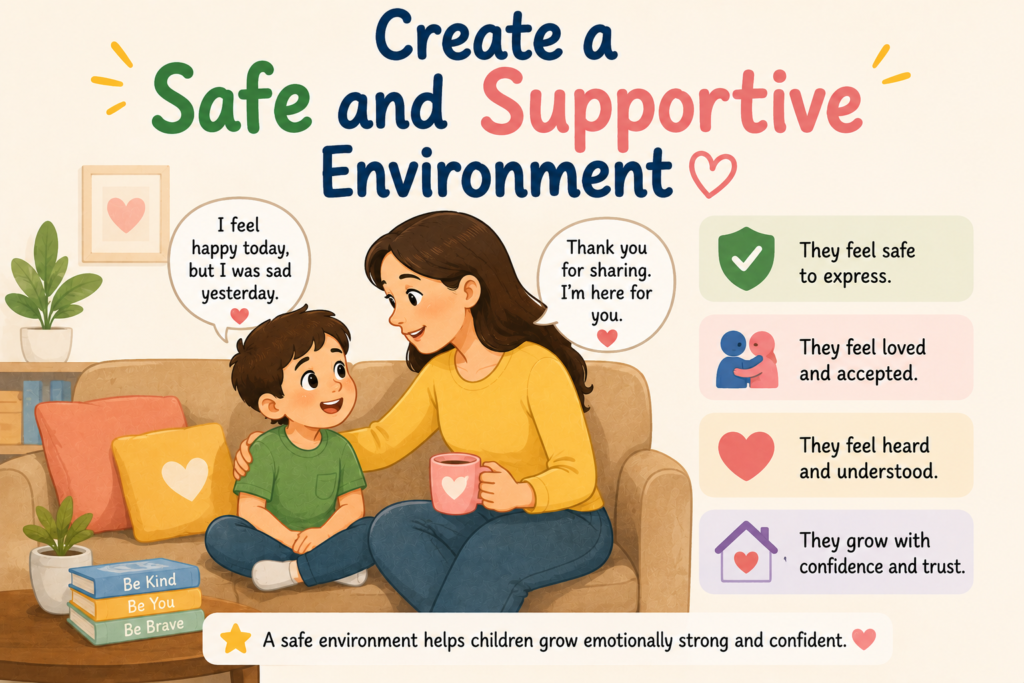
A nurturing home environment fosters emotional growth. Children who feel secure are more likely to express their emotions honestly. Consistent routines, open communication, and non-judgmental listening build this foundation.
When children know they won’t be criticized or punished for expressing feelings, they become more open to discussing struggles and learning how to manage them.
8. Teach Mindfulness and Self-Regulation
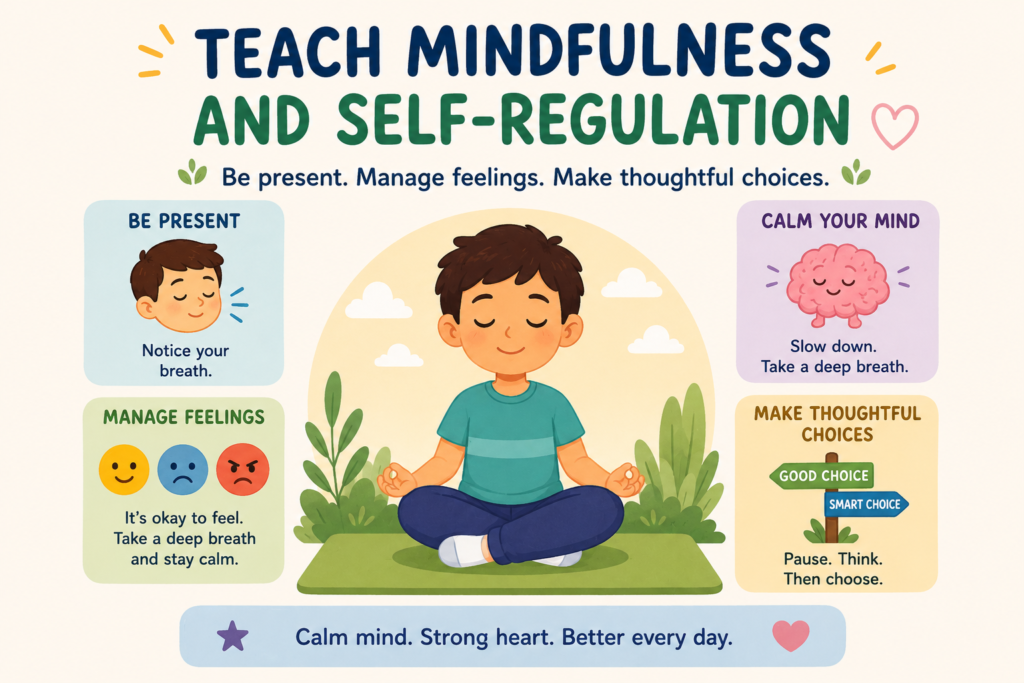
Mindfulness activities can significantly enhance emotional intelligence by improving focus, patience, and self-control. Simple practices like guided breathing, gratitude journaling, or short meditation sessions can help children become more aware of their emotions and reactions.
For younger kids, even a brief exercise like “smell the flower, blow the candle” breathing can teach calmness and self-regulation.
9. Praise Efforts, Not Just Outcomes
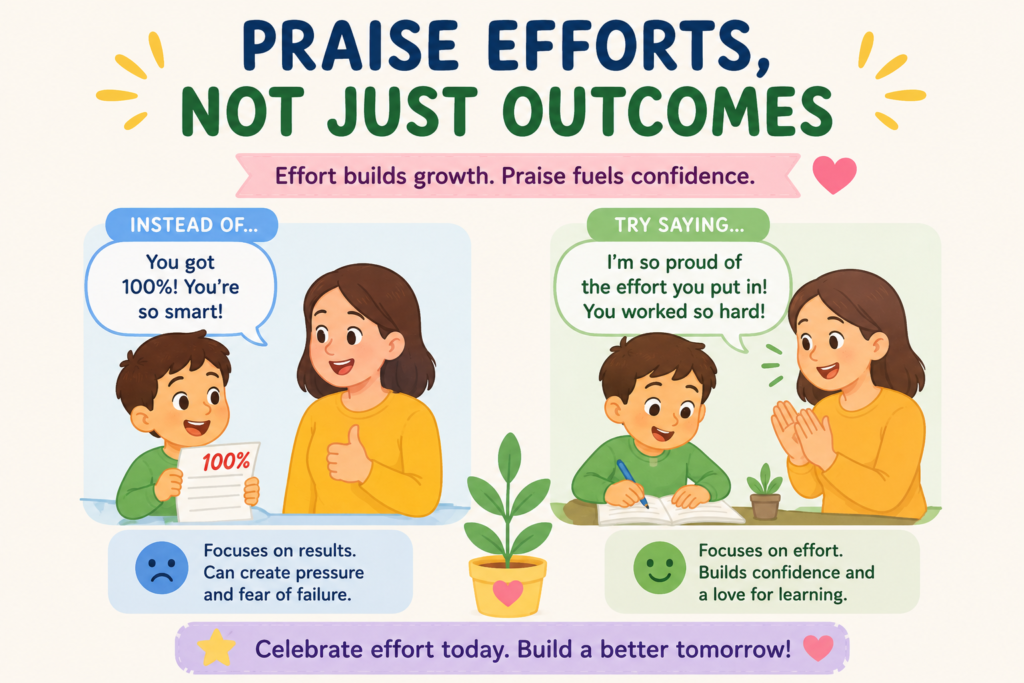
Children thrive on encouragement. Instead of focusing solely on results, acknowledge their emotional efforts—like trying to stay calm during frustration or showing kindness to a friend. Praise such actions with comments like, “I’m proud of how you stayed calm when your block tower fell.”
This helps reinforce emotional intelligence as an achievement in itself, not just academic or athletic success.
10. Be Patient and Consistent
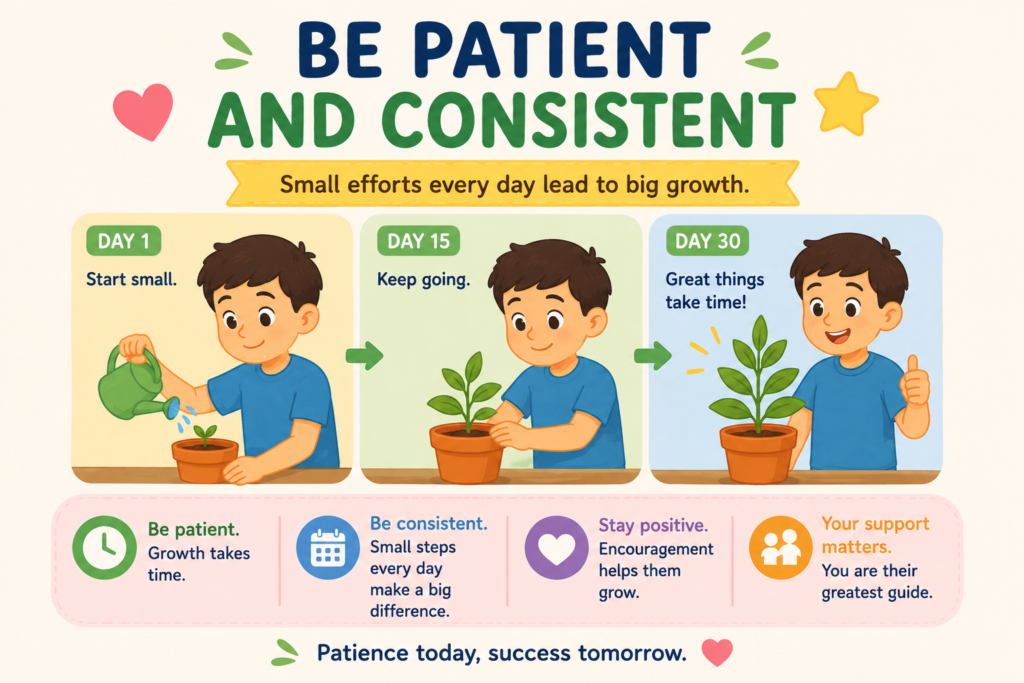
Emotional intelligence is a lifelong skill, not a quick lesson. Children will make mistakes, have meltdowns, and struggle with empathy at times. Patience and consistency are key. Gentle guidance, repeated teaching moments, and unconditional support will gradually instill emotional maturity.
Raising emotionally intelligent children requires intentional effort, empathy, and patience.
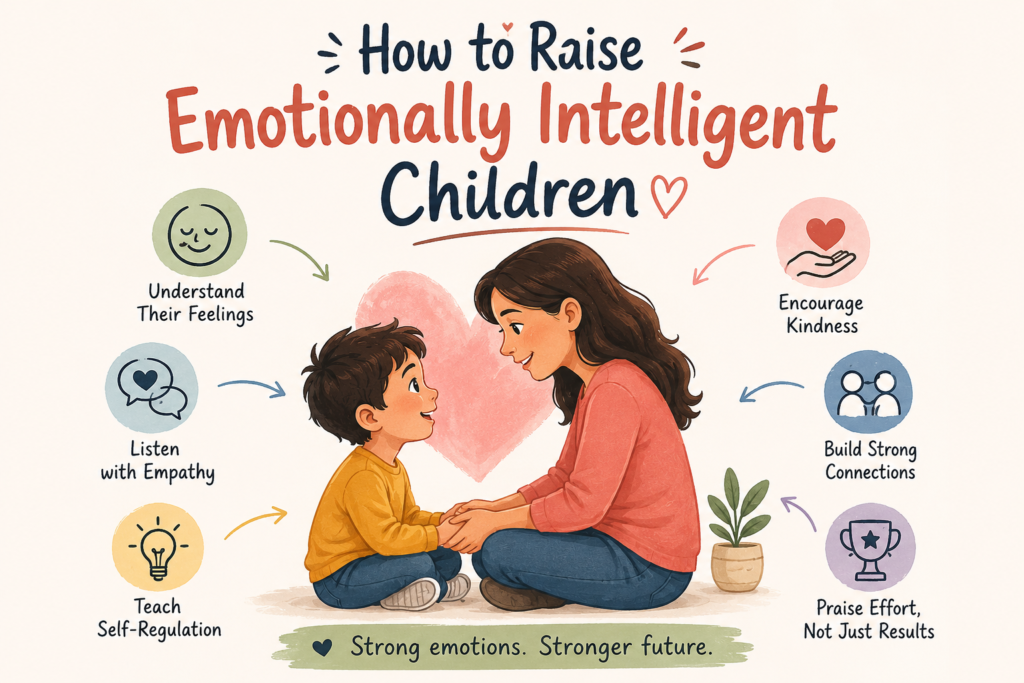
By teaching them to recognize, validate, and express their feelings, modeling emotional intelligence in daily life, and providing tools for regulation and empathy, parents can equip their children with skills that go far beyond academics. These children grow into adults who can navigate challenges, build meaningful relationships, and contribute positively to society.
In a world where emotional resilience and empathy are increasingly valued, fostering emotional intelligence in children may be one of the greatest gifts parents can give.