
Creating a happy and harmonious home goes beyond beautiful interiors and modern amenities. For centuries, Vastu Shastra, the ancient Indian science of architecture and energy flow, has guided homeowners in designing spaces that promote peace, prosperity, and well-being.
MORE INFO: simple vastu bedroom tips
No matter if you are moving into a new home or looking to refresh your current space, it is important for you to understand the basics of Vastu, which will help you cultivate more positivity and balance. This beginner’s guide covers essential principles and practical tips to get started.
Understanding Vastu Shastra
What Is Vastu?
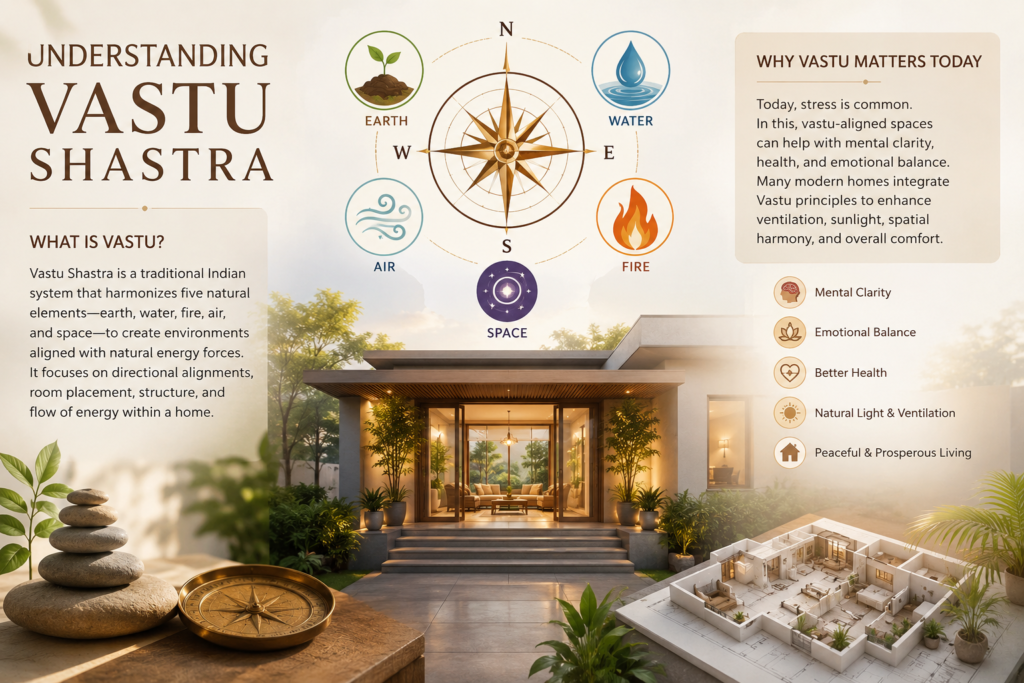
Vastu Shastra is a traditional Indian system that harmonizes five natural elements—earth, water, fire, air, and space—to create environments aligned with natural energy forces. It focuses on directional alignments, room placement, structure, and flow of energy within a home.
Why Vastu Matters Today
Today, stress is common. In this, vastu-aligned spaces can help with mental clarity, health, and emotional balance. Many modern homes integrate Vastu principles to enhance ventilation, sunlight, spatial harmony, and overall comfort.
Key Principles of Vastu for Home Energy
1. The Importance of Directions
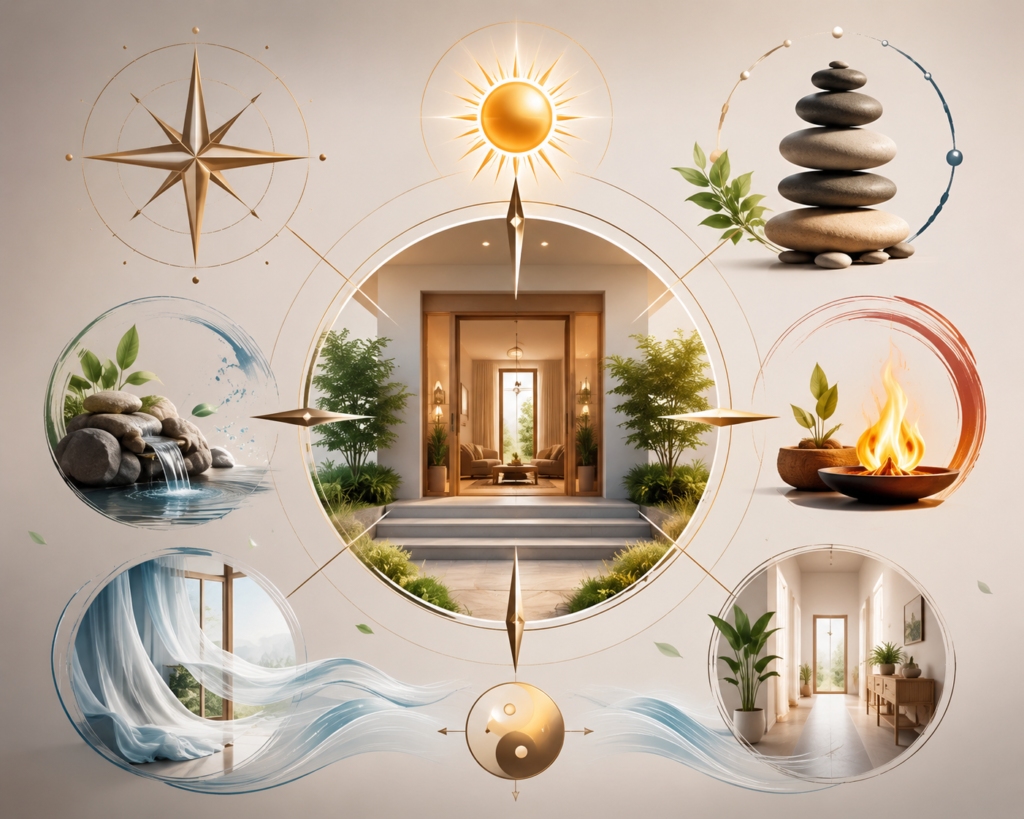
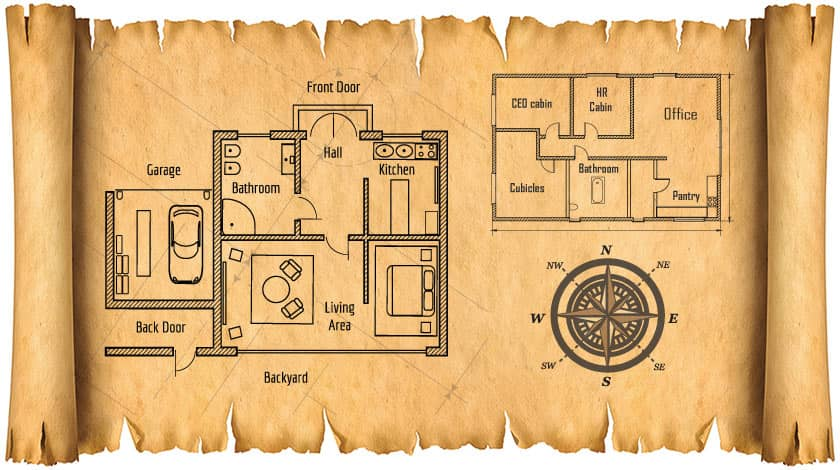
Vastu heavily relies on the eight cardinal directions—North, South, East, West, and the four diagonals. Each direction is associated with a specific energy type and planetary influence. Correct placement of rooms ensures the right energy flows through your home.
2. Balance of the Five Elements
A Vastu-balanced space maintains harmony among:
- Earth (Prithvi): Stability
- Water (Jal): Flow and abundance
- Fire (Agni): Strength and transformation
- Air (Vayu): Movement and joy
- Space (Aakash): Expansion
Imbalance in any element can affect mood, health, or productivity.
3. Energy Flow Matters
Clutter, blocked pathways, and dark corners disrupt positive energy. Vastu encourages free movement of air and light, creating uplifting, calm, and healthy living spaces.
Room-Wise Vastu Guide for a Positive Home
1. Living Room: Invite Positivity
As the first space guests see, the living room should feel open and welcoming.
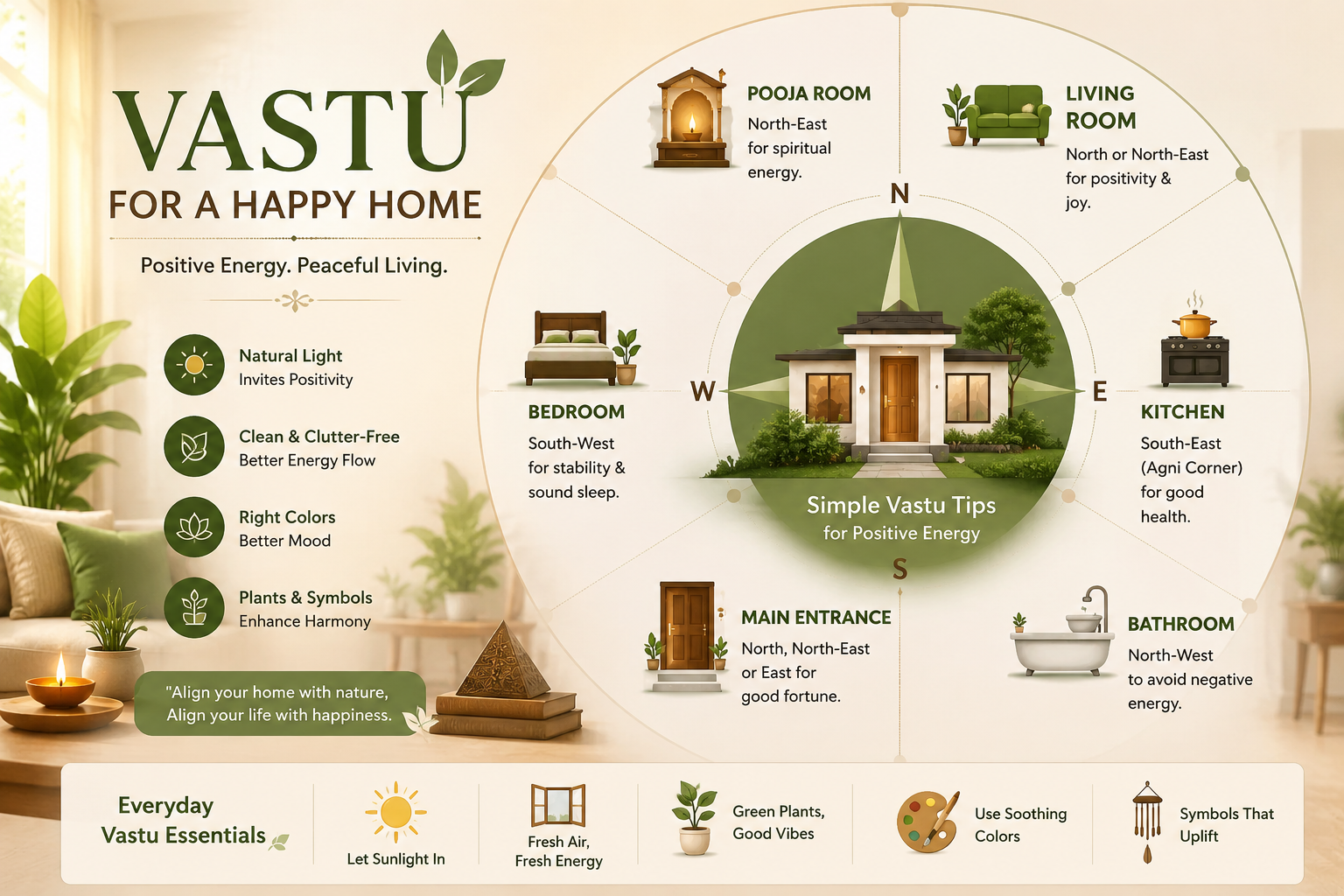
- Best Direction: North-East or North for living rooms.
- Ideal Setup: Keep furniture arranged to promote open movement.
- Do: Use soothing colours like white, beige, or pastels.
- Don’t: Place mirrors facing the main door—they may deflect energy.
2. Bedroom: Promote Rest and Harmony
Your bedroom influences mental peace and relationships.
- Best Direction: South-West for the master bedroom; ensures stability.
- Placement Tips:
- Bed should be placed with the headboard towards the South or East.
- Avoid placing the bed directly opposite a mirror.
- Colours: Soft shades like lavender, cream, or light blue enhance calmness.
3. Kitchen: Channel the Fire Element
The kitchen represents the fire element, which governs digestion, strength, and energy.
- Best Direction: South-East (Agni corner). North-West is the second-best.
- Placement Tips:
- The stove should face East.
- Keep water and fire elements separate—avoid placing the sink next to the stove.
- Do: Maintain cleanliness and avoid keeping expired food, as it attracts stagnant energy.
4. Pooja Room: Sacred Zone for Spiritual Energy
A peaceful prayer corner strengthens inner harmony.
- Best Direction: North-East, the most spiritual and auspicious.
- Placement Tips:
- Keep idols away from walls, with minimal clutter.
- Avoid bedrooms or below staircases for the pooja space.
5. Bathroom: Keep Negativity in Check
Bathrooms can accumulate negative energy if not placed correctly.
- Best Direction: North-West or West.
- Tips:
- Keep the bathroom clean and dry.
- Ensure proper ventilation and keep doors closed when not in use.
6. Main Entrance: Gateway to Energy
Vastu places major importance on the main entrance, considered the doorway for energy.
- Best Direction: North-East, North, or East.
- Key Tips:
- The entrance should be well-lit and free of obstacles.
- Use a clean doormat, symbolic of leaving negativity outside.
- Avoid shoe racks or clutter near the main door.
Simple Vastu Tips for Everyday Positive Energy
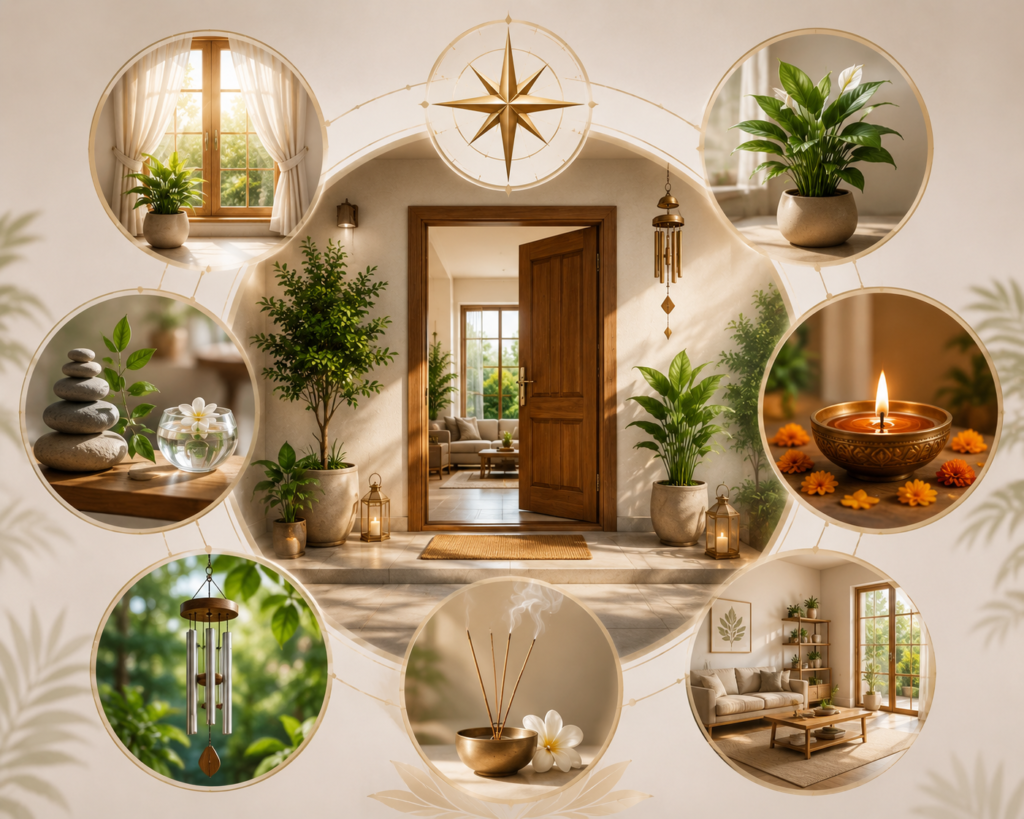
Declutter Regularly
Clutter blocks energy flow and increases stress. Keep surfaces clean, organize storage, and discard unused items.
Let Natural Light In
Sunlight boosts energy and reduces negativity. Keep windows open during the day to allow fresh air and light.
Use Plants to Enhance Energy
Indoor plants such as bamboo, money plant, tulsi, and peace lily help purify air and improve positivity.
Avoid thorny plants like cactus or plants with decaying leaves.
Incorporate Vastu-Friendly Colors
Colour vibrations play a major role in mood and energy:
- Yellow: Positivity and warmth
- Blue: Calm and communication
- Green: Growth and healing
- White: Purity and clarity
Choose colours that match the purpose of each room.
Use Symbols of Positivity
Placing items like vastu pyramids, salt bowls, or metal wind chimes can amplify good energy.
Hanging meaningful artwork—such as nature scenes or uplifting symbols—can also enhance emotional wellbeing.
Common Vastu Mistakes to Avoid
- Mirrors facing the bed or main door
- Broken clocks or décor items
- Dark, unventilated corners
- Heavy furniture blocking windows
- Keeping electronic items in unused condition
Correcting these small issues can instantly uplift your home’s vibration.
Conclusion
A Vastu-compliant home isn’t just about following rules—it’s about living in alignment with nature. Whether you adopt a few basic principles or go for a complete Vastu makeover, the goal remains the same: to create a space filled with positivity, peace, and harmony. Even small changes, like keeping your home clean, allowing sunlight, or choosing the right colours, can bring a noticeable shift in overall energy.
By applying these beginner-friendly Vastu tips, you can transform your home into a nurturing environment where happiness, health, and prosperity naturally flow.