
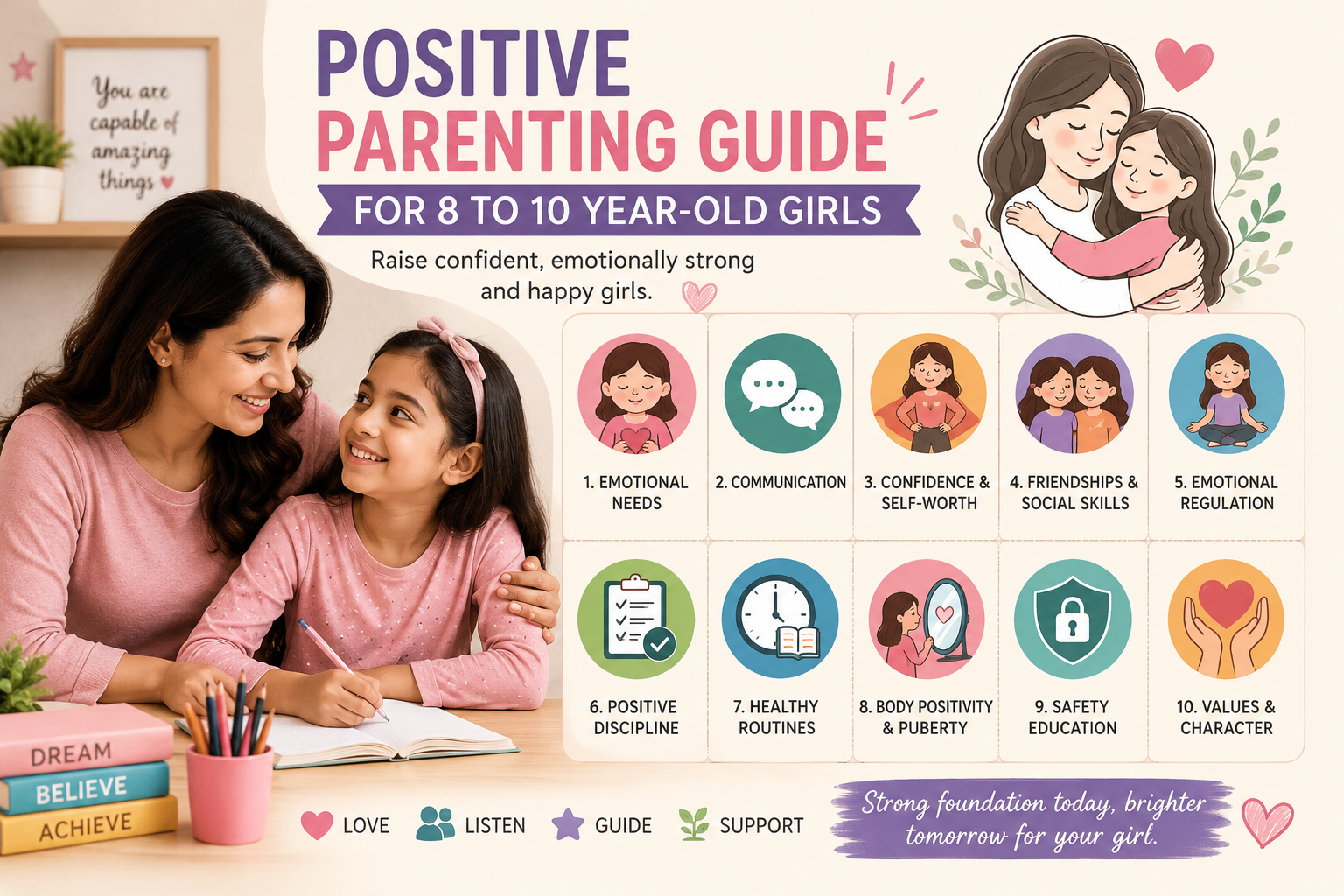
Positive parenting guide for 8- to 10-year-old girls is essential for building confidence, emotional strength, and healthy habits during these important years of growth. Raising an 8–10-year-old girl is a unique and rewarding journey. At this age, children develop emotionally, socially, and mentally at a rapid rate.
This detailed parenting guide is built for WordPress users who want an easy-to-upload, reader-friendly, chart-supported article.
Chart 1: Key Emotional Needs
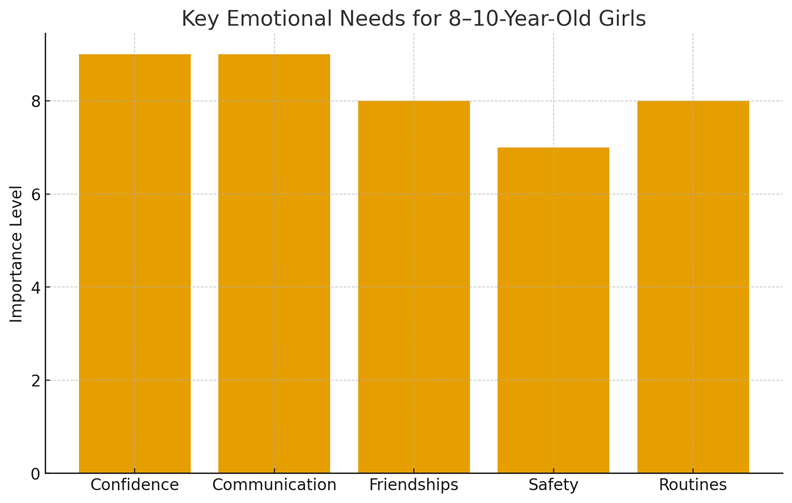
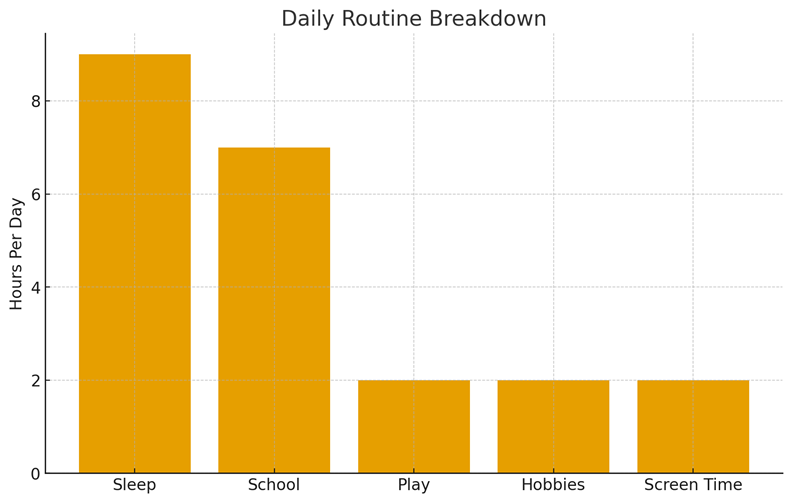
Chart 2: Healthy Daily Routine Breakdown
1. Emotional Needs
Girls aged 8–10 experience stronger emotions and often struggle to express them clearly. Parents should listen with patience, validate their feelings, and avoid criticism. Encouraging journaling, drawing, or talking openly helps children recognise and express their emotions.
2. Communication
Healthy communication is the foundation of strong bonding. Ask open-ended questions, avoid interrupting, and maintain daily 10-minute emotional check-ins. Children share more when parents listen without correcting them immediately.
3. Confidence & Self-Worth
Support them in learning new skills, praise effort (not perfection), allow small decision-making, and encourage hobbies. Confidence at this age builds long-term independence and resilience.
4. Friendships & Social Skills
This age can be full of friendship challenges—exclusion, jealousy, and peer pressure. Teach your child to identify healthy friendships, say “no” without guilt, and talk openly about conflicts. Role-play can help them practice good social responses.
5. Emotional Regulation
Teach deep breathing, counting to 10, taking a break, using positive self-talk, and journaling feelings. These tools help reduce emotional outbursts and improve emotional maturity.
6. Positive Discipline
Focus on guiding rather than punishing. Set clear house rules, apply consistent consequences, and explain expected behaviour. Avoid shouting, threats, or comparing your child to others.
7. Healthy Routines
A balanced routine reduces stress and improves focus. A good routine includes enough sleep, study time, outdoor play, screen limits, hobbies, and personal hygiene. Routines build discipline naturally.
8. Body Positivity & Puberty
Introduce early conversations about body changes in a simple and reassuring way. Teach good hygiene, boundaries, and help your child understand that every body grows differently. Avoid body shaming or comparisons.
9. Safety Education
Teach basic safety rules: body autonomy, difference between safe and unsafe touch, online safety, and trusted adults. Safety habits should be taught calmly—not fearfully.
10. Values & Character
Girls learn values best through real examples. Practice kindness, honesty, responsibility, and gratitude at home. Use daily situations to explain right and wrong naturally.