
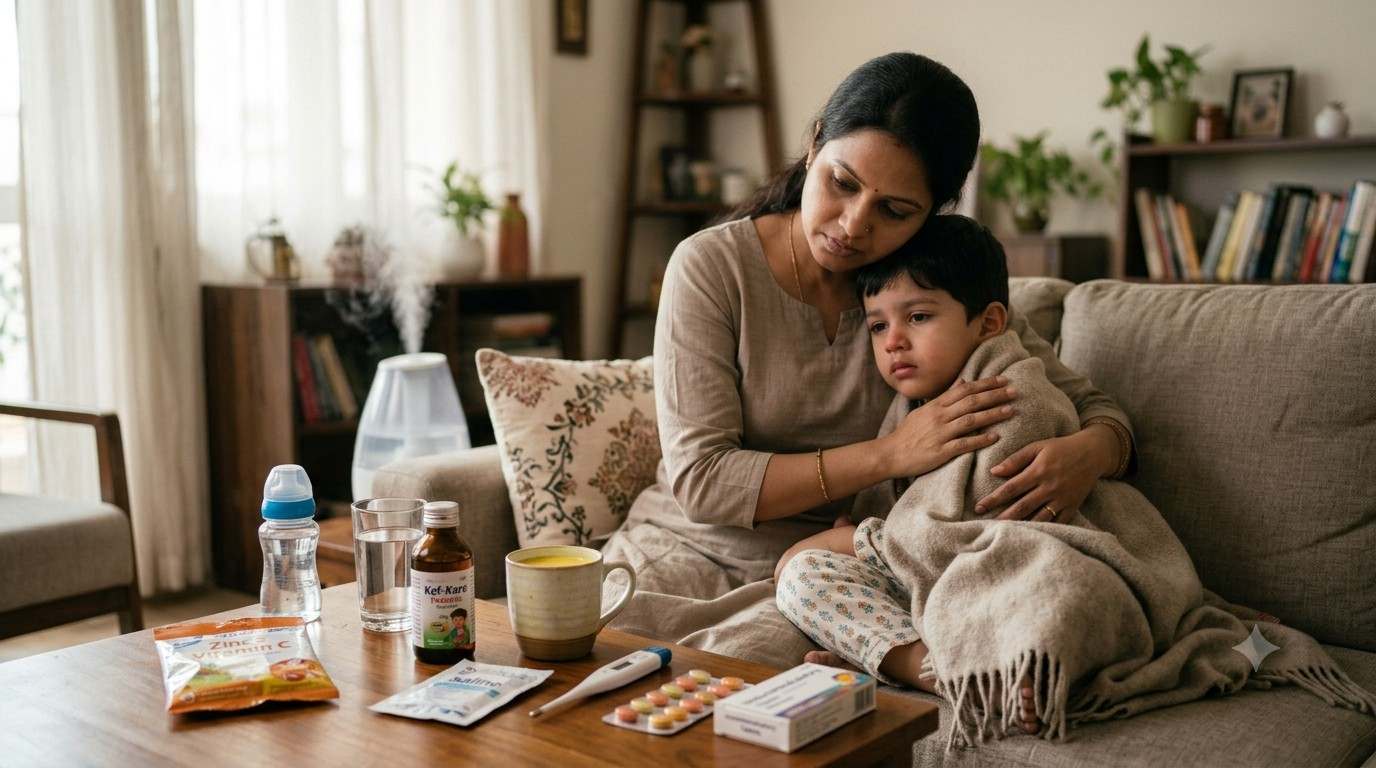
Every Indian household knows the familiar, heart-tugging sound of a child coughing through the night. As parents, watching your little one struggle with a runny nose, congestion, and persistent cough and cold in kids can be emotionally exhausting. You wiped their nose yesterday, gave them warm soup today, but the cold simply refuses to leave.
If it feels like your child catches a new cold every few weeks, you are not alone. With seasonal transitions, exposure to school microbes, and urban environmental factors, respiratory issues in children have become increasingly common across Indian cities. In fact, standard health estimates reveal that Acute Respiratory Infections (ARI) account for up to 50% of pediatric doctor visits in India.
Understanding why a lingering cough happens, how to comfort your child safely at home, and when to seek medical intervention can bring much-needed peace to your family.
Table of Contents
Why Is Cough and Cold in Kids So Common in India?
Children’s immune systems are still developing, making them particularly vulnerable to viral infections. However, specific environmental and lifestyle triggers in India often prolong these illnesses:
- Developing Immunity & School Exposure: Young children are exposed to dozens of new viruses in playschools and classrooms. Since their immune memory is building, they can easily catch 6 to 8 colds every year.
- Rising Air Pollution & Smog: Urban centers across India face high AQI (Air Quality Index) levels, especially during winter and crop-burning seasons. Fine particulate matter ($PM_{2.5}$) irritates delicate airways, turning a minor viral infection into a prolonged dry cough.
- Weather Transitions & Seasonal Swings: Monsoon dampness and sudden temperature shifts between air-conditioned rooms and warm outdoor air trigger allergic rhinitis and upper respiratory irritation.
- Post-Viral Cough: Even after the main virus leaves the body, sensitive airways can remain inflamed for 2 to 3 weeks, causing a lingering tickle.
Causes of a Prolonged or Persistent Cough in Children
Not all coughs are created equal. Identifying the root cause helps you provide targeted care:
- Viral Upper Respiratory Tract Infections (URTI): Common viruses like rhinovirus or adenovirus cause typical cold symptoms—runny nose, mild fever, and a wet cough.
- Allergies and Asthma: Constant exposure to dust mites, pet dander, or outdoor pollution can cause allergic coughs, which often worsen at night or during early mornings.
- Post-Nasal Drip: Mucus dripping down the back of the throat during sleep causes frequent coughing spells at night.
- Secondary Bacterial Infection: Occasionally, a simple cold can progress into sinus infections or bronchitis requiring specific medical evaluation.
Safe Home Remedies for Cough and Cold in Kids
Indian heritage offers time-tested, gentle remedies that provide immense relief alongside proper medical advice:
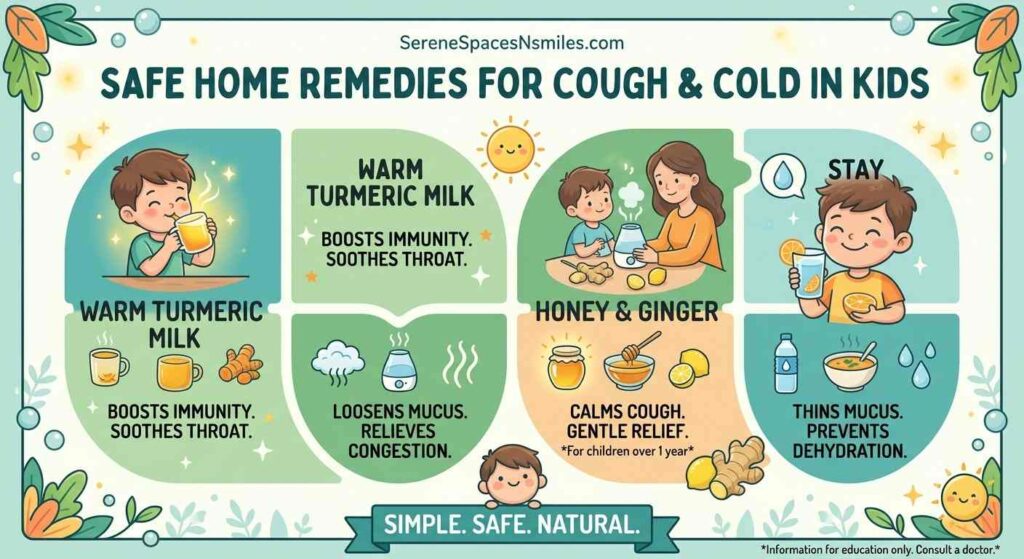
1. The Power of Warm Turmeric Milk (Haldi Doodh)
Curcumin in turmeric acts as a natural antioxidant and anti-inflammatory agent. A warm cup of haldi doodh before bedtime soothes an irritated throat and encourages rest.
2. Steam Inhalation and Saline Drops
For toddlers and older kids, gentle steam from a facial steamer or hot shower helps loosen thick mucus. For infants, pediatrician-approved saline nasal spray drops soften crusty nasal passages before feeding or bedtime.
3. Honey and Ginger Concoction (For Kids Above 1 Year)
Note: Never give honey to infants under 12 months due to the risk of infant botulism.
For older children, a mixture of a half teaspoon of raw honey with a few drops of ginger juice or crushed tulsi leaves coats the throat and calms coughing fits naturally.
4. Hydration with Warm Fluids
Offer frequent sips of lukewarm water, vegetable soups, or light dal khichdi. Proper hydration keeps mucus thin and easier to clear.
Crucial Precautions and Prevention Tips
Preventing recurrent infections requires a mix of good hygiene habits and environmental management:
- Maintain Indoor Air Quality: Dust mites, indoor dampness, and poor air circulation can aggravate respiratory symptoms. Learn more about protecting your home in our guide on indoor air quality and family health.
- Enforce Hand Hygiene: Teach children to wash their hands thoroughly with soap after returning home from school or play outdoors.
- Balanced Nutrition: Ensure your child eats a diet rich in seasonal fruits, leafy greens, and protein to boost their baseline immunity.
- Encourage Active Play Over Screen Time: Sedentary screen time can disrupt sleep cycles, which directly impacts a child’s immunity. Read our article on how to manage screentime for kids to establish healthy boundaries.
- Avoid Unnecessary Antibiotics: Viral colds do not respond to antibiotics. Self-medicating with leftover antibiotics can weaken your child’s gut health and cause antibiotic resistance.
- Keep Kids Engaged Outdoors & Off Screens: Restful, active days promote better sleep and stronger immunity. Explore these 10 engaging offline activities for kids that can actually compete with video games to keep them happily occupied indoors or outdoors.
When Should You Consult a Pediatrician?
While most coughs clear up with time, you should seek immediate medical attention if you notice any red-flag symptoms:
- Rapid, shallow, or labored breathing (chest indrawing)
- Persistent high fever lasting more than 3 days
- Bluish tint on lips or fingernails
- Extreme lethargy, refusal to drink fluids, or inability to sleep
- A cough lasting continuously for more than 3 weeks
Medical Disclaimer: The information provided in this article is for educational and informational purposes only and is not intended as medical advice, diagnosis, or treatment. Every child’s health needs are unique. Always seek the advice of a qualified pediatrician or medical professional with any questions regarding your child’s health condition or symptoms. Never delay or disregard seeking professional medical advice because of something you have read on Serene Spaces & Smiles.