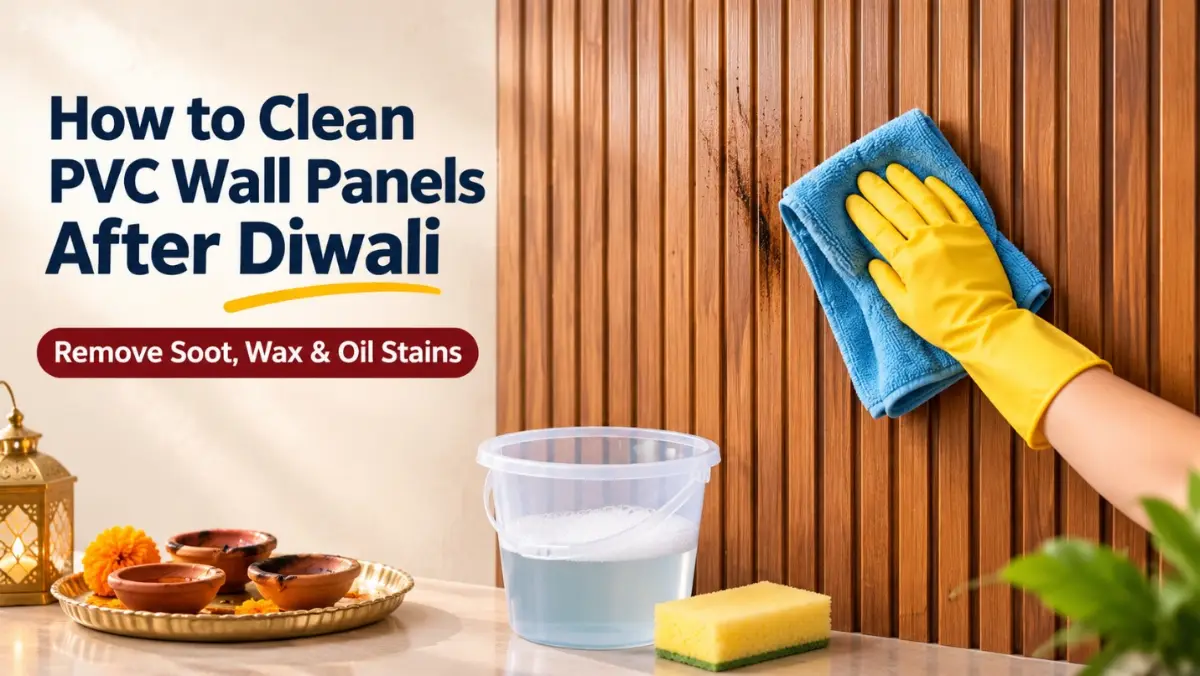
Diwali is over, the diyas have burnt out, and now the walls are telling the story: black soot marks above the mandir, wax drips on the panel, and oily fingerprints near the door. The good news is that how to clean PVC wall panels is simple, and you can do it at home with things already in your kitchen.
PVC is one of the easiest wall finishes to keep clean. But the wrong cleaner or a rough scrubber can leave permanent scratches or dull patches.
In this guide, you will learn the safe way to clean PVC panels step by step, how to remove soot, wax and diya oil stains, how to treat painted walls and wallpaper, and a few post-Diwali habits that keep your home fresh.
What You Need to Clean PVC Wall Panels
You do not need special products. A PVC panel manufacturer recommends a soft sponge or cotton cloth, lukewarm water and a mild dish detergent (Palram).
Keep these ready:
- A bucket of lukewarm water with a few drops of mild dish soap
- A soft sponge and two microfibre or cotton cloths (one to clean, one to dry)
- A plastic scraper or an old credit card, for wax
- Ice cubes in a plastic bag, and a hair dryer
- Isopropyl alcohol (rubbing alcohol), for stubborn marks
- A dry soot sponge (also called a chemical sponge), if you have heavy soot
What NOT to use on PVC panels
| Avoid | Why |
|---|---|
| Abrasive powders and scrubbers (steel wool, rough scrub pads) | They scratch the surface and leave dull patches |
| Strong or high-alkaline cleaners | They can damage thermoplastics like PVC |
| Knives, blades or razors | They cut and scratch the panel |
| Wiping dry dust hard | Trapped grit can scratch the surface |
| Leaving cleaner on for a long time | It can stain; rinse straight away |
Source: Palram PVC care and maintenance guide. Always test any cleaner on a small hidden corner first.
How to Clean PVC Wall Panels: 7 Easy Steps
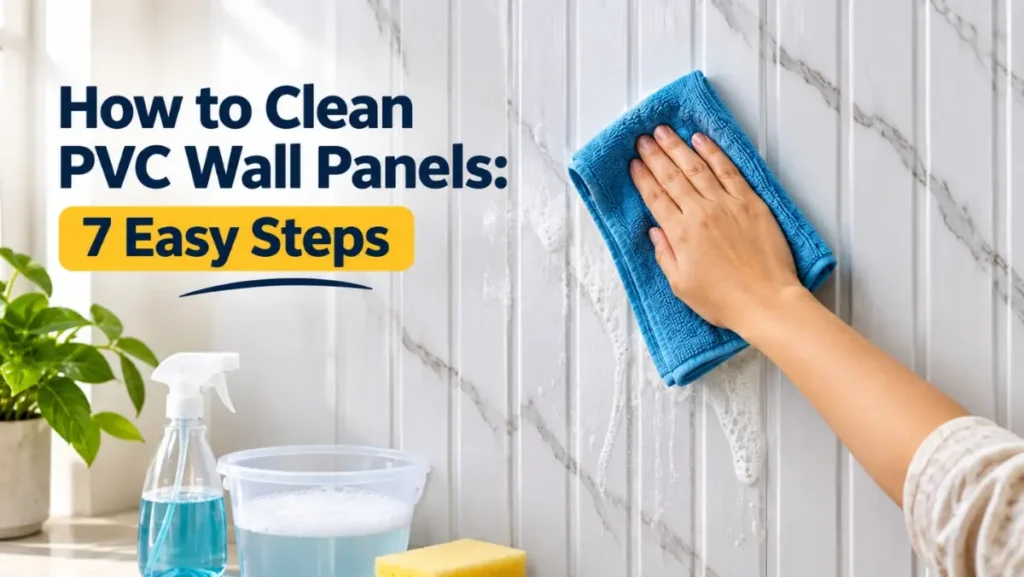
Follow these steps for a regular post-Diwali clean. Deal with heavy soot and wax first, using the stain guide in the next section.
- Open the windows. Fresh air helps the panels dry and clears leftover smoke.
- Switch off and protect. Turn off LED strips or lights fitted in the panels, and cover nearby sockets with tape before using water.
- Remove loose dust. Use a soft brush attachment on a vacuum, or a dry feather duster. Do not rub dry dust hard, because grit can scratch the surface (Palram).
- Mix a mild soap solution. Add a few drops of dish soap to a bucket of lukewarm water.
- Wipe from top to bottom. Dip a soft sponge, squeeze it well, and clean the panels from top to bottom (Easy Panels). For fluted panels, wipe along the grooves, not across them.
- Rinse. Wipe again with a second cloth dipped in clean water to remove soap and avoid streaks (Easy Panels).
- Dry. Pat the panels dry with a soft cloth, paying extra attention to joints and edges where water collects (Easy Panels).
After the festival, a quick wipe every week or two keeps panels looking new (Easy Panels).
How to Remove Diwali Stains from PVC Panels
Each Diwali stain needs a slightly different approach. Start with the gentlest method and move up only if needed.
How to remove soot from walls and panels
Black soot from diyas, candles and agarbatti smears easily if you attack it with a wet cloth. Restoration experts recommend removing loose soot first, then dry-cleaning, and only then washing (Rainbow Restoration).
- Vacuum gently with a brush attachment held slightly away from the surface, starting at the top.
- Use a dry soot sponge. Wipe with a dry chemical sponge, which absorbs soot instead of spreading it. Do not wet this sponge, and cut away parts that turn black.
- Wash what is left with water and a dish soap that contains a degreaser. Rinse your cloth often in clean water.
Wear gloves and a mask if the soot is heavy, and keep windows open (Rainbow Restoration).
How to remove wax from wall panels
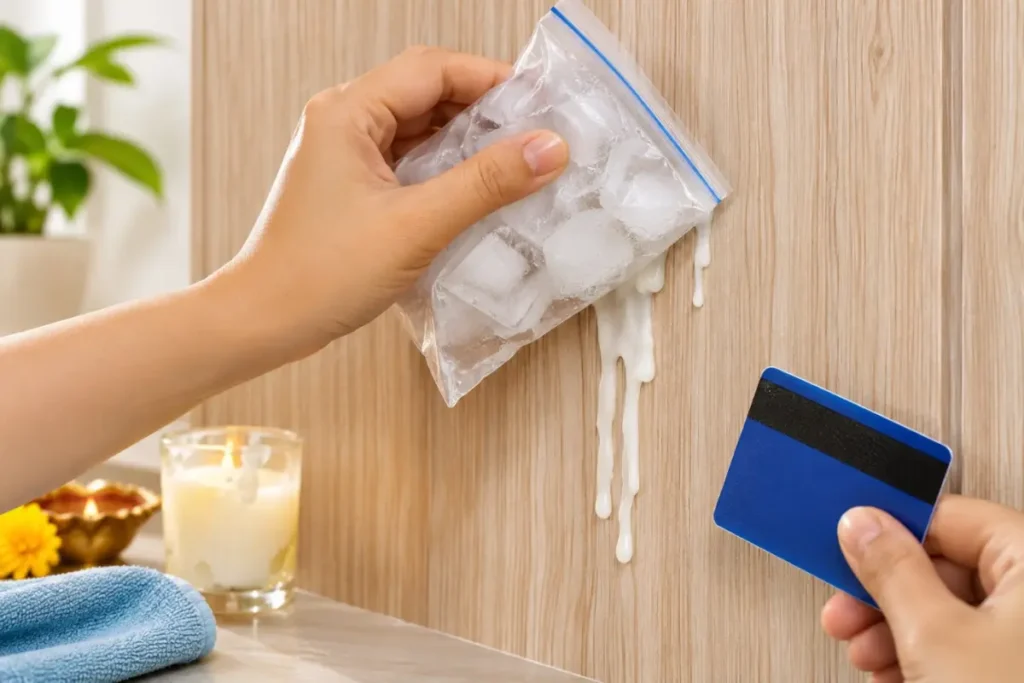
Candle and diya wax comes off easily if you make it hard first, or soften it gently (Cleanipedia).
- Freeze it. Hold a bag of ice on the wax until it becomes brittle.
- Scrape gently with a plastic scraper or an old credit card. Never use a knife.
- For thin layers, use low heat. Warm the leftover wax with a hair dryer on a medium setting, and wipe it away with a soft cloth as it melts. Keep the dryer moving and not too close, because too much heat can mark PVC.
- Clean the residue with your soap solution, then rinse and dry.
Diya oil stain removal
Oil from diyas and greasy fingerprints are common near the mandir and doorway.
- Blot fresh oil with a dry tissue first. Do not rub it in.
- Wipe with warm water and a few extra drops of dish soap, which cuts grease.
- For old, sticky marks, dab a little isopropyl alcohol on a cloth and wipe. Isopropyl alcohol is listed as compatible with PVC by a panel manufacturer (Palram). Test it on a hidden spot first.
- Rinse with clean water and dry.
Rangoli colour, kumkum and haldi marks
Wipe dry powder away with a soft brush before using water, so it does not smudge. Then clean the mark with mild soapy water. Turmeric can leave a yellow tint; wipe it quickly, and repeat gently rather than scrubbing hard.
Quick stain guide
| Stain | First step | If it stays |
|---|---|---|
| Soot | Vacuum, then dry soot sponge | Dish soap with degreaser |
| Candle or diya wax | Ice, then plastic scraper | Hair dryer on medium, then wipe |
| Diya oil | Blot with tissue | Isopropyl alcohol on a cloth (test first) |
| Rangoli colour | Dry brush | Mild soap and water |
| Fingerprints | Mild soap and water | Isopropyl alcohol on a cloth |
Cleaning Painted Walls and Wallpaper After Diwali
Not every wall in your home is panelled. Painted walls and wallpaper need a gentler touch than PVC.
Painted walls
- Remove soot the same way: vacuum, dry soot sponge, then a mild degreasing soap (Rainbow Restoration).
- For wax, use ice and a plastic card, and be very gentle so you do not lift the paint (Cleanipedia).
- Clean leftover wax marks with a vinegar and water mix in a 1:3 ratio, using a soft cloth (Cleanipedia).
- Use as little water as possible on matte or distemper paint, which can rub off. Test on a hidden spot first.
Wallpaper
- Vinyl wallpaper can usually take a lightly damp cloth with mild soap.
- Fabric, paper and non-woven wallpapers can stain or peel when wet. Use only a dry soot sponge or a soft brush on these.
- Never soak the seams, because water can make the edges lift.
Comparing wall finishes for your next makeover? Our guide to wall panelling cost in India compares PVC, WPC, MDF and wallpaper, including how easy each one is to clean.
Post-Diwali Cleaning Tips for the Whole Home

Once the walls are clean, a few simple habits will finish the job.
Clear the air
Smoke from diyas, incense and firecrackers can linger indoors for days. Open windows during cleaner outdoor hours, run exhaust fans, and wash or replace AC and purifier filters. Our guide on indoor air quality and family health has more simple fixes.
Store your decor properly
- Clay diyas: wash, dry fully in the sun, and wrap in newspaper so they do not crack.
- String lights: coil them loosely around a piece of cardboard to avoid tangles, and remove batteries from LED diyas.
- Cloth and silk torans: wash gently, dry, and fold with a cloth bag.
- Brass items: clean, dry, and store in a cloth bag to slow tarnishing.
- Label every box, so next year’s decorating takes minutes, not hours.
If you tried the trends from our Diwali decoration ideas for home, most of those pieces can be reused next year with a quick refresh.
Look after your panels for the long run
Well-fitted PVC panels can last 12–15 years, but panels on a damp wall can fail within two monsoons (JK Cement). While cleaning, check for:
- Panels that have lifted or bulged, which can mean damp behind the wall
- Gaps in edge beading or silicone, which let water in
- Scorch or heat marks near where diyas were placed
Fix small problems early. If you are planning new panels, see our 12 PVC wall panel design ideas, and for the mandir area, our pooja room design ideas.
FAQs on How to Clean PVC Wall Panels
What is the best way to clean PVC wall panels?
Use lukewarm water with a few drops of mild dish soap and a soft sponge. Wipe from top to bottom, rinse with a clean damp cloth, and pat dry.
Which cleaner should I use on PVC panels?
Mild dish soap in lukewarm water is enough for most dirt. For stubborn marks, a little isopropyl alcohol on a cloth works; avoid abrasive powders, steel wool and strong alkaline cleaners.
How do I remove soot from walls? (Deewar se kala dhuan kaise hataye?)
Vacuum loose soot first, then wipe with a dry soot sponge. Clean what remains with water and a degreasing dish soap, and keep windows open while you work.
How do I remove wax from a wall panel?
Harden the wax with ice, then scrape it off gently with a plastic card. Warm any thin leftover wax with a hair dryer on medium and wipe it away.
Can I use a scrubber on PVC panels?
No. Steel wool and rough scrub pads scratch PVC and leave dull patches. Use only a soft sponge or microfibre cloth.
How often should I clean PVC wall panels?
A quick wipe every week or two is enough for most homes. Do a deeper clean after festivals or whenever you see soot or grease building up.
Conclusion: A Clean, Fresh Home After the Festival
Knowing how to clean PVC wall panels the right way saves you time and protects your walls for years. Mild soap, a soft sponge and a little patience will handle most Diwali marks. Ice and a plastic card take care of wax, and a dry soot sponge stops black marks from spreading.
Start with the walls near the mandir and the main door, where most diyas were lit. Then clear the air, pack your decor carefully, and your home will be ready for the next celebration.
Which Diwali stain was the hardest to clean in your home? Share your tips in the comments below.
Also read: