
Have you ever noticed that during high-stress weeks at work—or after days filled with constant rush and anxiety—your stomach feels uncomfortably tight, full, or visibly swollen? You might be eating clean, drinking water, and avoiding traditional trigger foods, yet persistent stress and bloating continue to leave you feeling uncomfortable by the end of the day.
The missing link often isn’t what is on your plate; it’s what is happening in your nervous system.
The relationship between cortisol and gut health is one of the most powerful, yet frequently overlooked, aspects of modern wellness. Understanding how chronic stress triggers physical digestive distress—and knowing how to lower cortisol naturally—can help you restore balance to your gut and eliminate stubborn bloating for good.
How Stress Causes Bloating: Understanding the Gut-Brain Axis
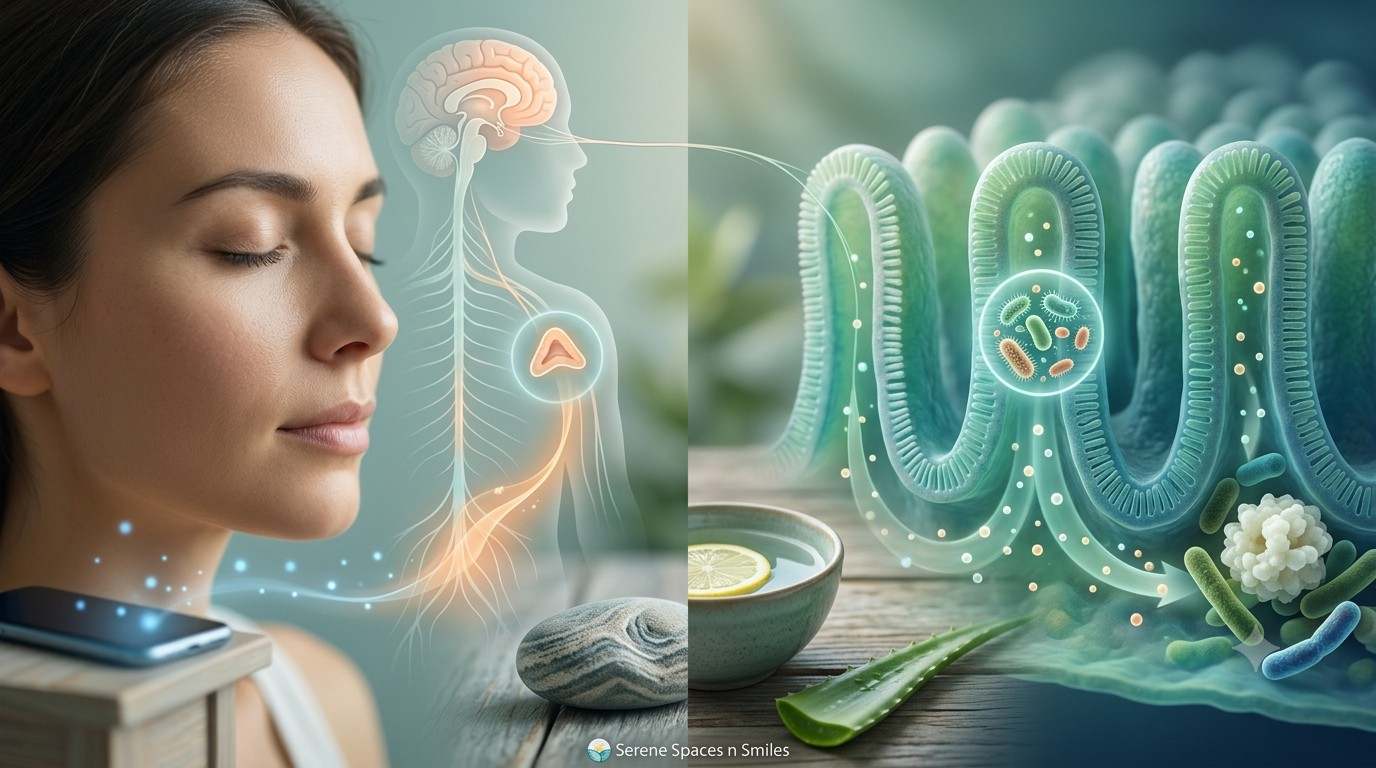
Your brain and your gastrointestinal tract share a direct, two-way communication pathway known as the gut-brain axis. Connected by the vagus nerve, your central nervous system talks to your gut microbiome continuously.
When you experience psychological stress, your adrenal glands release cortisol, your body’s primary stress hormone. In short bursts, cortisol is protective. However, chronic stress creates a constant state of high alert, disrupting your digestion in three distinct ways:
- Slowed Gastric Emptying: High cortisol diverts blood flow away from the digestive tract toward your muscles, preparing you to “fight or flee.” As a result, food sits in your stomach longer, leading to fermentation, gas accumulation, and morning bloating.
- Disrupted Gut Microbiome: Elevated stress hormones reduce beneficial gut bacteria while allowing opportunistic, gas-producing microbes to flourish. In fact, a systematic review published on PubMed confirmed that psychological stress directly alters the relative abundance of beneficial gut microbiota, depleting the essential bacterial strains responsible for keeping digestion smooth and inflammation low.
- Increased Intestinal Permeability: Prolonged high cortisol can weaken the intestinal lining (often referred to as “leaky gut”), triggering systemic low-grade inflammation and abdominal discomfort.
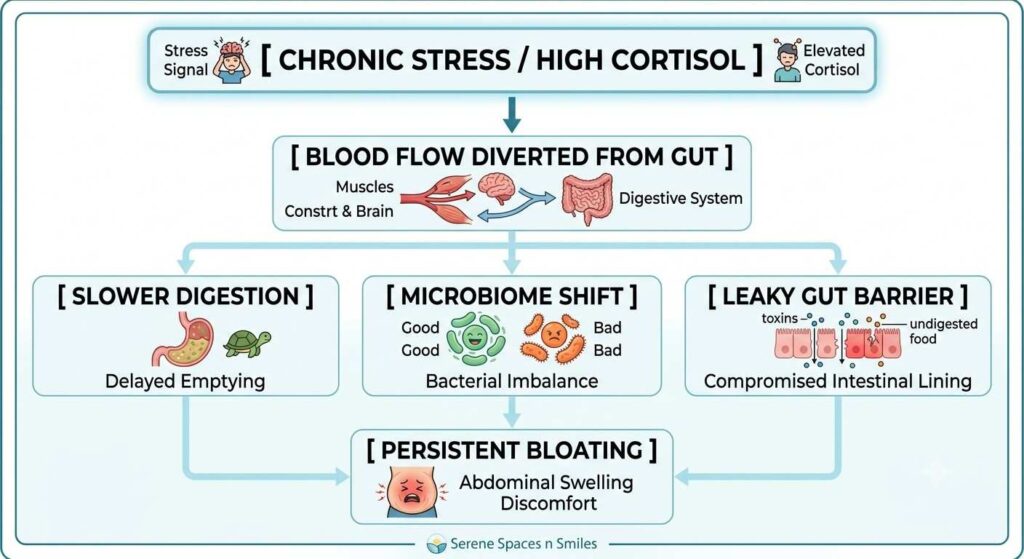
By understanding this gut-brain axis bloating mechanism, it becomes clear: to fix your stomach, you must first soothe your nervous system.
5 Daily Habits to Lower Cortisol and Calm Your Gut
You don’t need extreme cleanses or expensive supplements to support your digestive health. Implementing these five simple, science-backed daily habits will help regulate cortisol production and promote smooth, comfortable digestion.
1. Practice 3 Minutes of “Rest-and-Digest” Breathing Before Meals
Eating while stressed, distracted, or in a rush keeps your sympathetic nervous system (“fight-or-flight”) activated. Digestion requires the parasympathetic state—often called the “rest-and-digest” mode.
What to do:
- Sit quietly before your first bite of food.
- Take 5 deep, slow breaths using box breathing: Inhale through your nose for 4 seconds, hold for 4 seconds, exhale slowly for 4 seconds, and hold empty for 4 seconds.
- This simple action stimulates the vagus nerve, signaling your stomach to produce the digestive enzymes needed to break down food without causing excess gas.
2. Delay Morning Caffeine and Hydrate First
Reaching for a hot cup of coffee immediately after waking up on an empty stomach can spike cortisol levels drastically early in the day. Caffeine combined with dehydration irritates the gastric lining, leading to acid reflux and early morning abdominal distension.
What to do:
- Drink 1–2 glasses of room-temperature or warm water before your morning tea or coffee.
- Consider adding a squeeze of fresh lemon juice or a pinch of unrefined salt to support hydration and digestive juices.
- Enjoy your coffee after or alongside a balanced breakfast containing protein and healthy fats to buffer the cortisol response.
3. Eat Prebiotic-Rich Whole Foods to Nourish Your Microbiome
A resilient gut microbiome is your best defense against stress-induced digestive issues. Prebiotic foods feed beneficial gut bacteria like Lactobacillus and Bifidobacteria, which produce short-chain fatty acids (SCFAs) that protect your intestinal lining.
What to include in your diet:
- Soluble Fiber: Cooked oats, apples, flaxseeds, and chia seeds.
- Resistant Starch: Cooled cooked rice, potatoes, and green bananas.
- Traditional Prebiotic Herbs: Garlic, onions, cooked lentils, and leeks.
Note: Introduce high-fiber foods gradually. Increasing fiber too rapidly while your cortisol is high can temporarily increase gas production until your gut adapts.
4. Take a 10-Minute Post-Meal Walk
Sedentary habits after eating slow down intestinal contractions (peristalsis), causing trapped air to build up in the abdomen. Light movement encourages gas to move through the digestive system effortlessly.
What to do:
- Take a gentle 10- to 15-minute walk after lunch or dinner.
- Keep the pace relaxed—intense workouts immediately after a heavy meal can raise cortisol further and stall digestion.
- Light walking also helps regulate post-meal blood sugar levels, preventing the energy crashes that trigger cortisol spikes later in the day.
5. Create a Digital Wind-Down Routine for Nighttime Repair
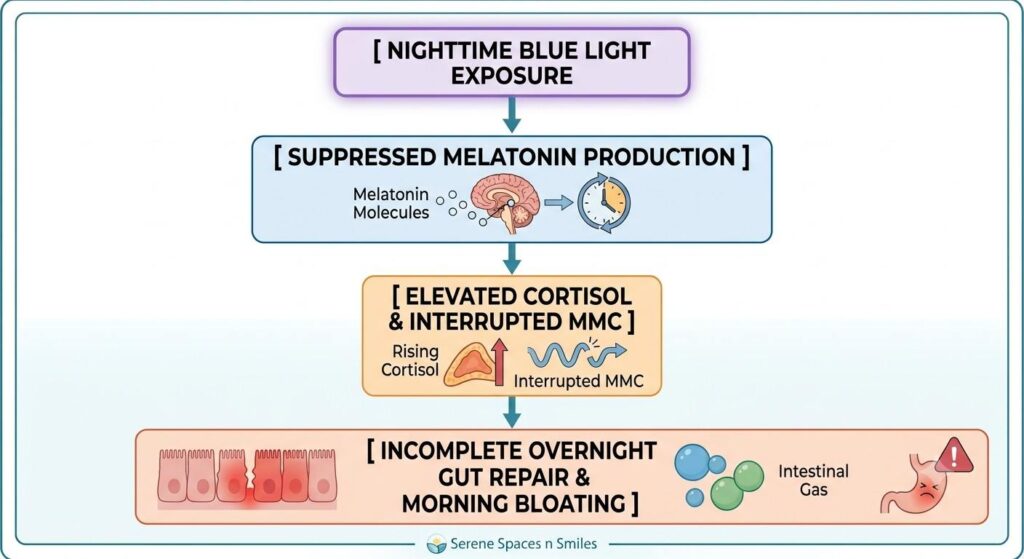
Your gut repairs its mucosal lining and balances its bacterial colonies overnight through a cleansing wave known as the Migrating Motor Complex (MMC). However, exposure to blue light from phones, tablets, and TVs late at night suppresses melatonin and keeps cortisol artificially high.
What to do:
- Set a “digital sunset” 60 minutes before bed by turning off screens.
- Finish your last meal or snack at least 2 to 3 hours before sleeping to give your digestive system time to rest.
- Engage in low-stimulation activities like reading, light stretching, or listening to calming music to drop your heart rate and prepare your gut for overnight recovery.
If you want to make your entire day healthy and fruitful, then check out Positive Morning Routines To Set the Tone for Your Day
When to Seek Medical Guidance
While lifestyle habits effectively manage functional bloating caused by stress, chronic symptoms shouldn’t be ignored. Consult a healthcare professional if you experience persistent pain, severe changes in bowel habits, unexplained weight loss, or bloating that does not respond to basic diet and lifestyle adjustments. Conditions like IBS, SIBO (Small Intestinal Bacterial Overgrowth), or food intolerances may require specific medical evaluations.
Final Thoughts: Small Daily Resets Create Lasting Relief
Overcoming stress-induced bloating isn’t about eliminating stress entirely—it’s about giving your body the tools to discharge that tension before it disrupts your digestive system.
By prioritizing vagal nerve activation, hydrating thoughtfully, nourishing your gut microbiome, and honoring evening rest, you can quiet the cortisol and gut health strain cycle. Start with just one habit this week—like taking 5 deep breaths before lunch—and give your digestive system the space it needs to settle naturally.