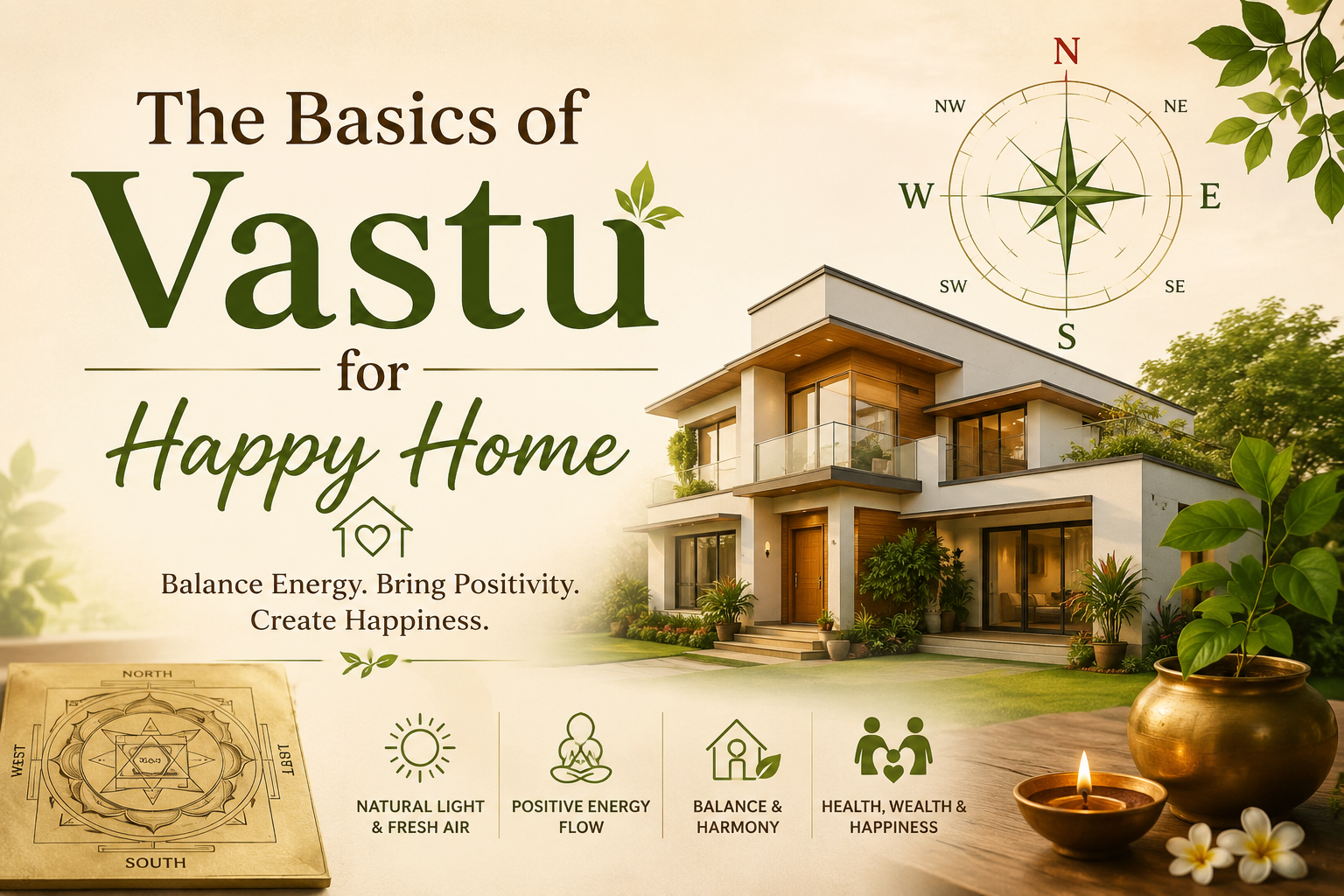
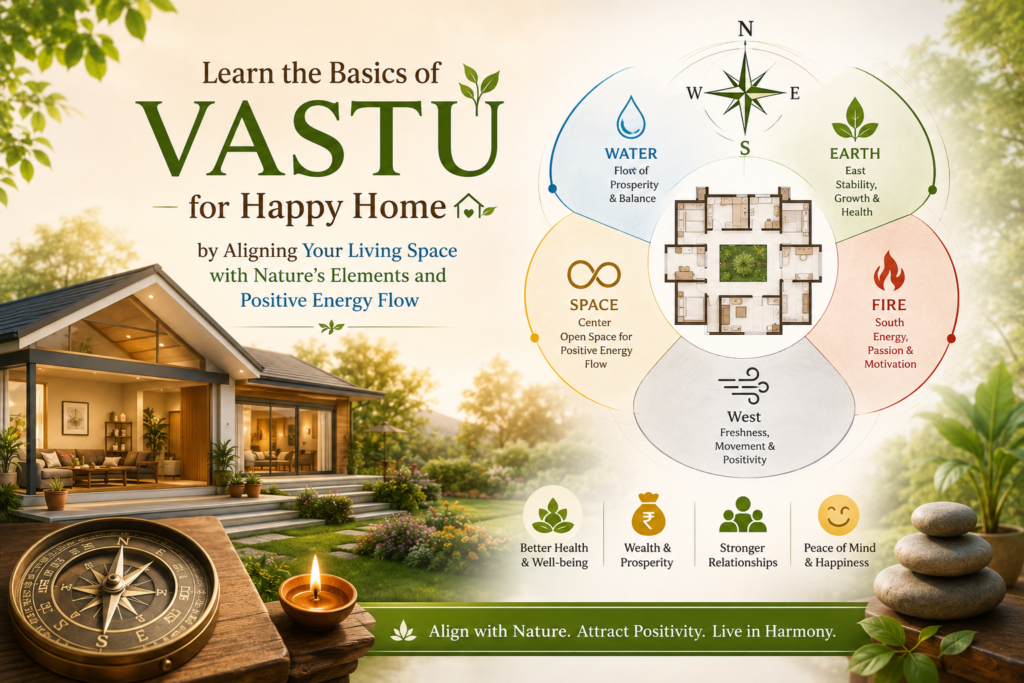
Learn the Basics of Vastu for Happy Home by Aligning Your Living Space with Nature’s Elements and Positive Energy Flow
A home is more than just bricks and walls, it’s a space where energy flows, emotions thrive, and memories are made. In Indian tradition, Vastu Shastra is the ancient science that guides how to harmonize this space with the forces of nature to create a happy, peaceful living environment. While often compared to Feng Shui, Vastu is deeply rooted in Indian philosophy and architecture, offering time-tested principles to design homes that support well-being, prosperity, and positivity.
What is Vastu for Happy Home?
Vastu Shastra literally translates to the “science of architecture.” It is an age-old system that outlines how to construct buildings in alignment with natural elements and cosmic energies. Vastu considers various factors such as directions, elements, light, ventilation, and layout to ensure a flow of positive energy in the house.
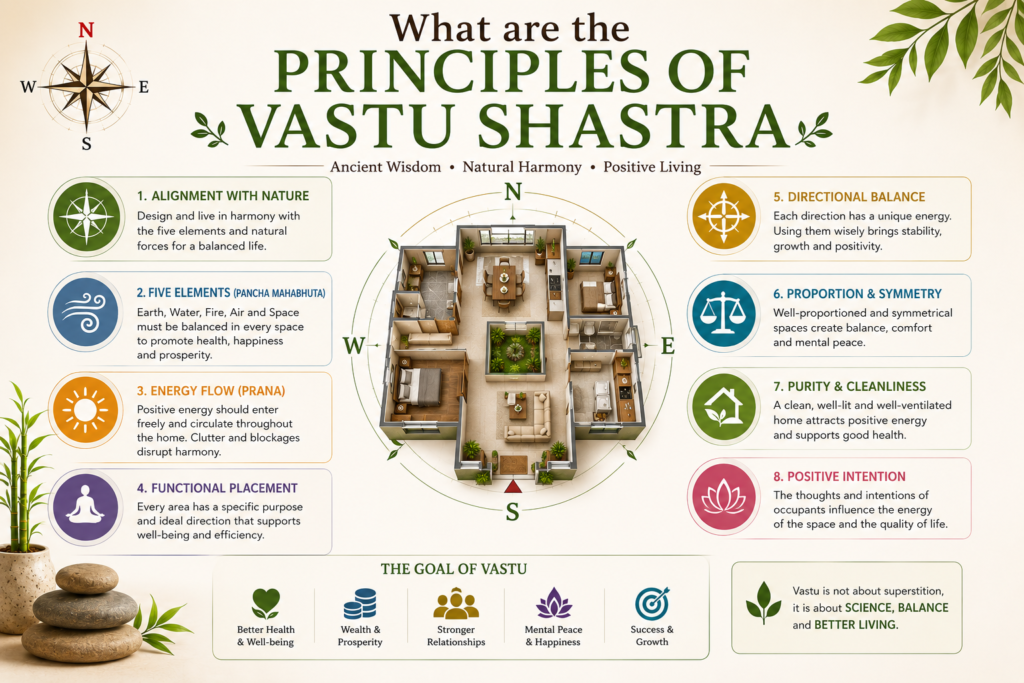
What are the Principles of Vastu Shastra
The Five Elements (Pancha Bhootas)
Vastu is based on balancing the five natural elements—Earth (Bhumi), Water (Jal), Fire (Agni), Air (Vayu), and Space (Akash). Each part of the home should ideally be positioned to harmonize with these elements for physical and emotional well-being.
Importance of Directions
Each direction in Vastu is associated with specific energies and deities. For example, the East is linked to the rising sun and vitality, while the Southwest is grounded and ideal for stability. Correct alignment ensures harmony, while misalignment may lead to disturbances in health, relationships, or finances.
Balance of Energy Flow
Vastu aims to optimize the flow of energy, also known as prana, within the home. When energy flows freely, it nurtures positivity and happiness; when blocked or stagnant, it may cause stress or negativity.
Ideal Vastu for Different Parts of the Home
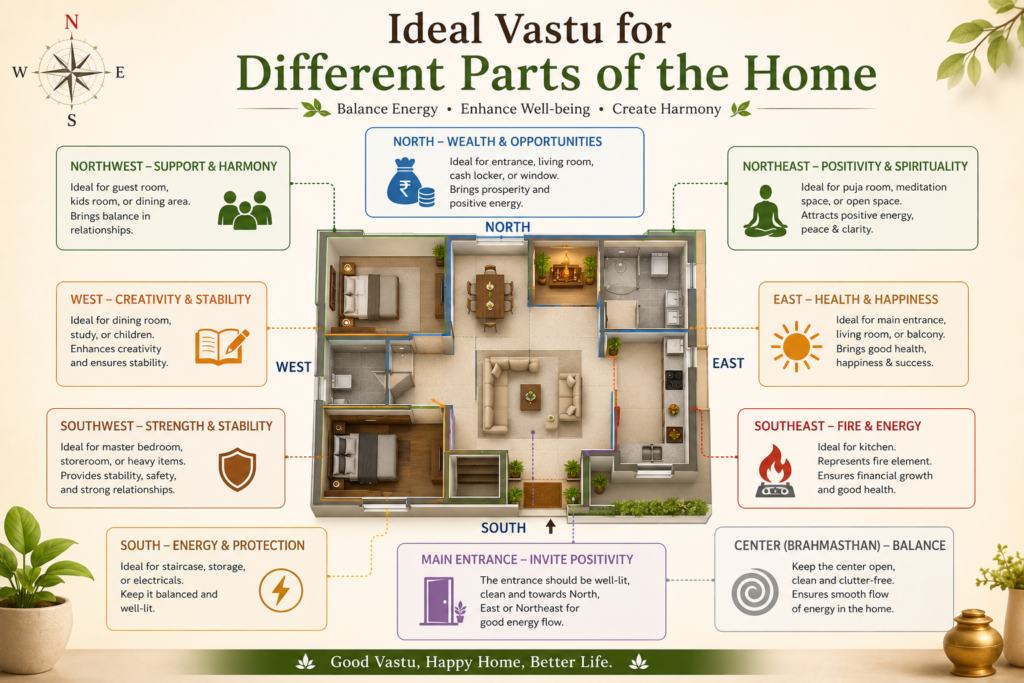
Main Entrance
The main door is the gateway for energy to enter the home. Ideally, it should face East or North, directions associated with progress and prosperity. To improve vastu for home entrance, keep the entrance clean, well-lit, and clutter-free. Avoid placing shoe racks or garbage bins near the door.
Living Room
The living room represents social interaction and should radiate warmth. Place it in the North, East, or Northeast direction. Arrange furniture in a way that encourages conversation, and avoid heavy furniture in the center, which can block energy flow.
Kitchen
The Southeast direction, governed by the fire element, is ideal for the kitchen. Place the stove in the southeast corner, and ensure the cook faces East while cooking. Avoid placing the kitchen directly under or above the pooja room or toilet.
Bedroom
The Southwest direction is best for the master bedroom as it provides stability. Sleeping with your head toward the South or East for restful sleep and mental peace is considered the right Vastu for bedroom. Avoid mirrors directly facing the bed, as they can disturb sleep and reflect negative energy.
Bathrooms and Toilets
Improper placement of bathrooms can cause energy drain. Ideal directions include the Northwest or Southeast corners. Always ensure good ventilation, and keep doors closed when not in use.
Pooja Room or Meditation Space
The Northeast (Ishan corner) is the most sacred space in Vastu, making it ideal for prayer or meditation rooms. Keep this area clean, well-lit, and spiritually uplifting. Place idols or photos facing West so you face East while praying.
Colors and Lighting in Vastu
Colors in Vastu have a psychological and energetic impact. Use light shades like white, yellow, light blue, or green to create a peaceful environment. Avoid dark, intense colors in large areas. Let natural light enter as much as possible, especially from the East. Soft, warm lighting can enhance comfort and ambiance.
Common Vastu Remedies for Modern Homes
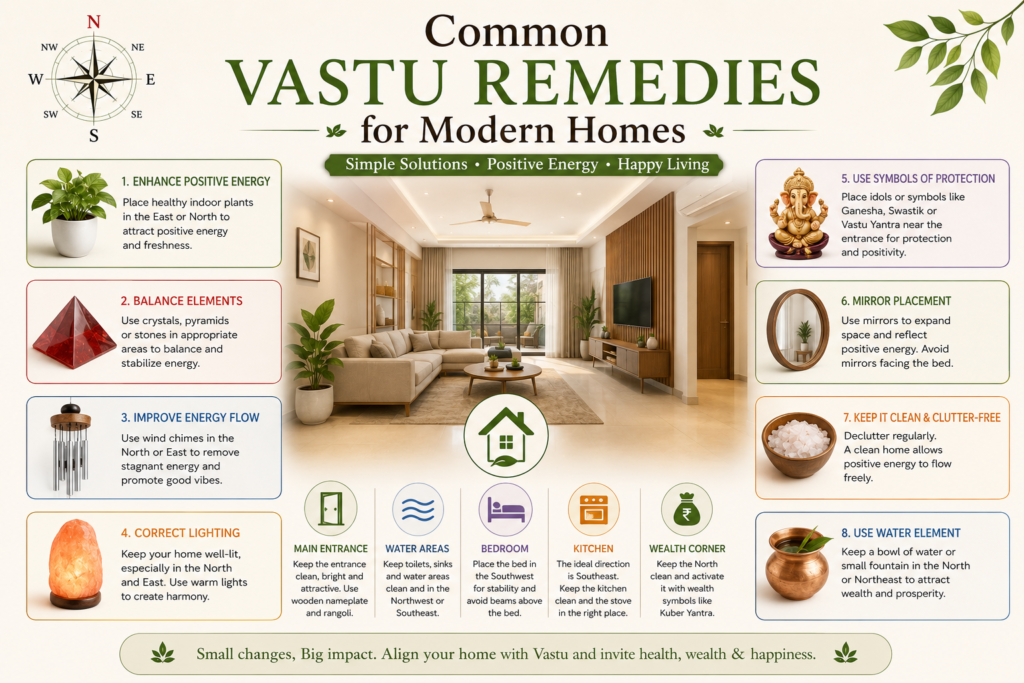
Not all homes are Vastu-compliant due to design or location constraints. Fortunately, simple remedies can help:
- Mirrors can redirect energy and correct missing spaces.
- Crystals, such as clear quartz or rose quartz, can balance negative energies.
- Indoor plants like tulsi, money plant, or bamboo purify air and attract positive vibes.
- Vastu pyramids or yantras can be placed in key locations to enhance energy flow.
These solutions allow residents to harness Vastu benefits without drastic structural changes.
Vastu Myths vs. Practical Application
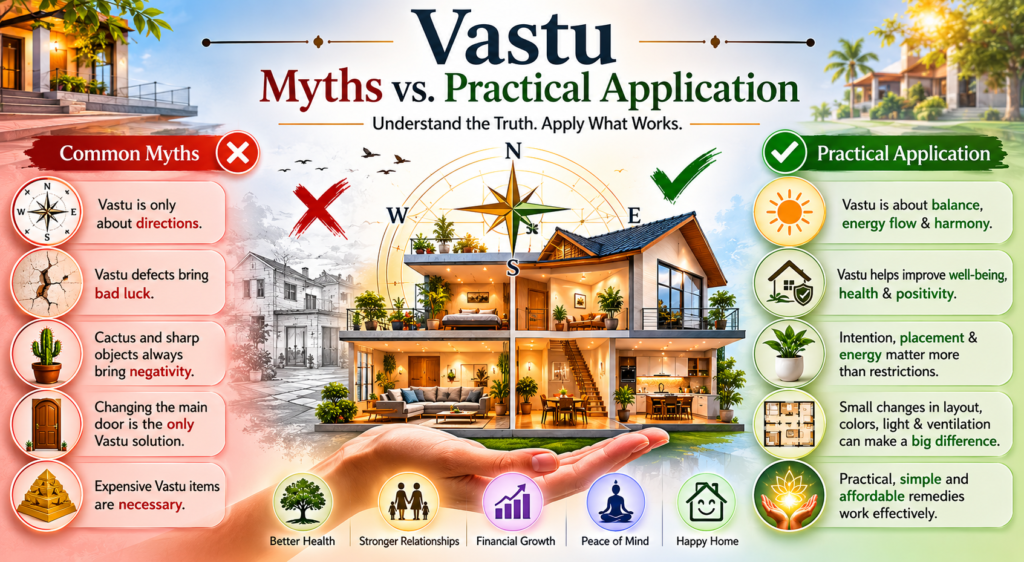
Many people assume that Vastu is rigid, superstitious, or outdated. In reality, it’s a practical design philosophy that emphasizes alignment with nature. While not every rule may be applicable in modern apartments, the core intention, creating harmony between people and their environment, remains highly relevant.
Modern Vastu practitioners often blend scientific understanding with traditional guidelines, focusing on airflow, lighting, layout, and aesthetics in line with ancient wisdom.
Conclusion
A happy home isn’t just about luxury or style, it’s about balance, warmth, and peace. Vastu Shastra, when applied mindfully, offers a blueprint for creating such an environment. It’s not about fear or superstition, but about tuning into the natural rhythms of life. Whether you’re building a new house or adjusting your current one, even small changes based on Vastu can bring a big shift in how your space feels—and how you feel in it.