

Tired of managing your budget and finances manually? This article reviews the 5 best automated budgeting apps in India for tracking your expenses and easing financial planning
When you are trying to figure out how to master personal budgeting, the biggest hurdle isn’t creating the initial plan but tracking your daily transactions. Manually typing every single Unified Payments Interface (UPI) payment, debit card swipe, and cash expense into a spreadsheet quickly leads to tracking fatigue. In India’s fast-paced digital economy, automation is a necessity. Automated personal finance apps solve this by using your smartphone’s secure SMS logs or secure bank APIs to record your cash flow in real time with zero manual effort.
If you want to shift away from reactive tracking and gain total control over your financial health, here is a hands-on review of the best automated budgeting apps in India.
1. axio (Formerly Walnut): Best Pure Expense Tracker
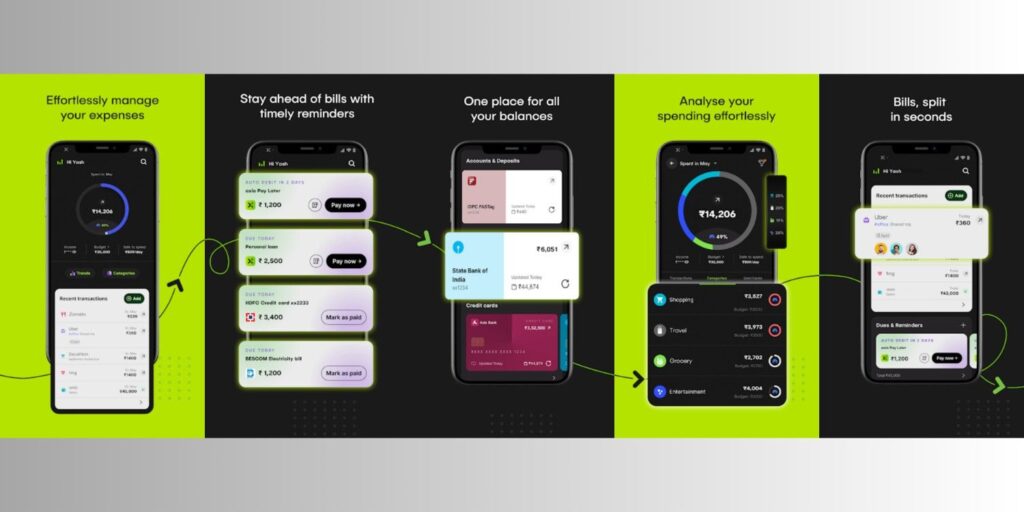
For years, axio has been a benchmark for automated personal finance apps in the Indian market. It functions entirely by reading the financial SMS alerts sent by your bank, credit card companies, and utility providers.
[Bank/UPI Transaction SMS] ──> [axio Smart Engine] ──> [Instant Auto-Categorization]
- How Automation Works: It instantly parses incoming merchant text messages. A ₹150 payment at a local vendor via Google Pay or PhonePe is automatically tagged under “Food & Dining” within seconds.
- Key Pros: Excellent tracking of Buy Now Pay Later (BNPL) credit balances; seamless split-billing management with friends; requires zero manual inputs or bank password connections.
- Cons: Because it depends entirely on SMS text messages, if you turn off text notifications for small transactions, the app won’t capture the data.
2. Wallet: Daily Expense Tracker


If you want deep, native automation without letting a third-party application read your smartphone’s text inbox, modern financial neobanks like Fi Money and Jupiter are excellent solutions.
- How Automation Works: These platforms function as zero-balance digital savings accounts (partnered with licensed institutions like Federal Bank). Because they process your transactions natively, their built-in AI engines track and analyze your habits directly at the source.
- Key Pros: Fi Money offers innovative “FIT Rules” that let you set up automated micro-savings goals (e.g., “Save ₹50 every time my favorite cricket team wins”). Jupiter offers brilliant, highly visual “Food vs. Travel” expenditure summaries.
- Cons: To maximize the automated features, you must use their provided digital accounts or co-branded debit cards as your main transaction avenue.
Also read: How to Master Personal Budgeting: The Ultimate Guide to Financial Freedom
3. INDmoney: Best for Complete Net Worth Tracking

For high-income professionals and seasoned retail investors, tracking daily grocery bills is only part of the puzzle; you also need a macro view of your entire wealth portfolio. INDmoney excels by aggregating all components of your net worth.
- How Automation Works: It safely links to your email statements, investment portals, and banks via secure APIs to track your financial data across multiple platforms.
- Key Pros: Consolidates domestic bank accounts, credit card spending, mutual fund Systematic Investment Plans (SIPs), Indian stocks, and US equities into a single, real-time dashboard.
- Cons: The platform frequently suggests investment products, loans, and insurance options, which can feel cluttered if you only want a simple expense logger.
4. Moneyview: Best for Simple, Zero-Effort Tracking
Moneyview has remained a reliable, straightforward personal finance app for over a decade. It maps out your finances cleanly without adding complex investment interfaces or demanding feature bloat.
- How Automation Works: It uses a secure on-device SMS parser to extract transaction data and generate simple weekly summaries.
- Key Pros: Provides clean data visualization with simple bar charts; offers helpful automated reminders for upcoming credit card bills and utility deadlines.
- Cons: The application includes promotional banners for personal loans and external credit lines.
5. jUMPP: The AI-Driven Up-and-Comer


If you want a modern, cutting-edge solution built for India’s current fintech ecosystem, jUMPP is an ambitious personal finance super-app gaining massive popularity. Unlike older platforms, it focuses heavily on blending proactive artificial intelligence with day-to-day transactional automation.
- How Automation Works: jUMPP operates via a highly advanced on-device AI engine that parses transaction alerts while prioritizing data privacy. It doesn’t just categorize your spending after the fact; it actively analyzes your velocity of spending against your set limits.
- Key Pros: Features an incredibly seamless “Save On” smart recommendation engine that uses your historical cash flow data to suggest exact, realistic areas where you can trim waste; cleanly integrates UPI tracking without lag.
- Cons: Because it functions as a comprehensive personal finance hub, it includes features for quick borrowing (“Loan It”) and investing, which might feel like overkill if you prefer an entirely minimalist interface.
The Verdict: Which Automated Budgeting App in India is Best for you?
Choosing the right tool depends entirely on your specific personal cash flow management style:
- For seamless background tracking via UPI and credit cards without linking raw bank credentials, axio is unmatched.
- For young professionals who love smart automated savings triggers, wallet offers the best tech stack.
- For active investors who want their daily expenses viewed alongside their mutual fund portfolios, INDmoney is the ideal solution.
Connecting Your Systems For Success
Remember: a tool is only as good as the blueprint you give it. An app can organize your transactions, but it cannot decide how your capital should be distributed. To set the exact structural boundaries your app will track, implement the allocation ratios outlined in our guide on the 50/30/20 budget rule explained in deep detail.
Additionally, once your automated app helps you identify and eliminate hidden cash leaks, don’t let that surplus money sit passively. Route those newly discovered savings toward protecting your household from unexpected emergencies by reviewing our comprehensive step-by-step guide to building a 6-month emergency fund.
By combining modern Indian fintech automation with the strategic principles found in our main manual on [how to master personal budgeting], you will successfully turn your smartphone into a high-yielding wealth engine.